Managing Campaign Power in 5e

Player power in 5e doesn’t rise in a straight line — it jumps. Learn how to recognize when your campaign baseline has shifted and how to adapt without escalating into an arms race.
Gather. Laugh. Roll
Gather. Laugh. Roll

Player power in 5e doesn’t rise in a straight line — it jumps. Learn how to recognize when your campaign baseline has shifted and how to adapt without escalating into an arms race.

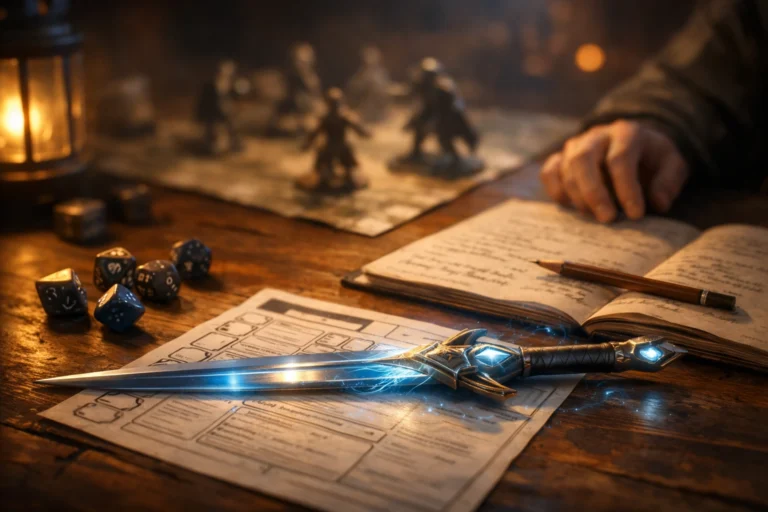
Before the music swells or the lights dim, someone rolls the dice. In this first installment of Ritual at the Table, we explore how weight, sound, maps, and physical tools shape consequence and immersion in long-form tabletop RPG campaigns.

At level 4, I gave my party rare-tier magic items and quietly rewrote my entire campaign. Here’s the framework I now use to design balanced magic items in 5e without shifting encounter math, collapsing attrition, or accelerating escalation.

Tabletop RPGs are more than rules and story, they are ritual. In this opening piece for Ritual at the Table, we explore how scent, light, sound, and texture shape immersion in long-form D&D campaigns.

Most encounters fail quietly, not because they’re deadly, but because they don’t matter. In this practical framework, learn how to design D&D combat that drives story, raises stakes, and creates lasting consequences in your campaign.