Homebrew • DM Tips • Character Building
Creating a Character: Fighter – The Tactical Anchor
How to build a character that belongs at the table, and thrives across a long campaign
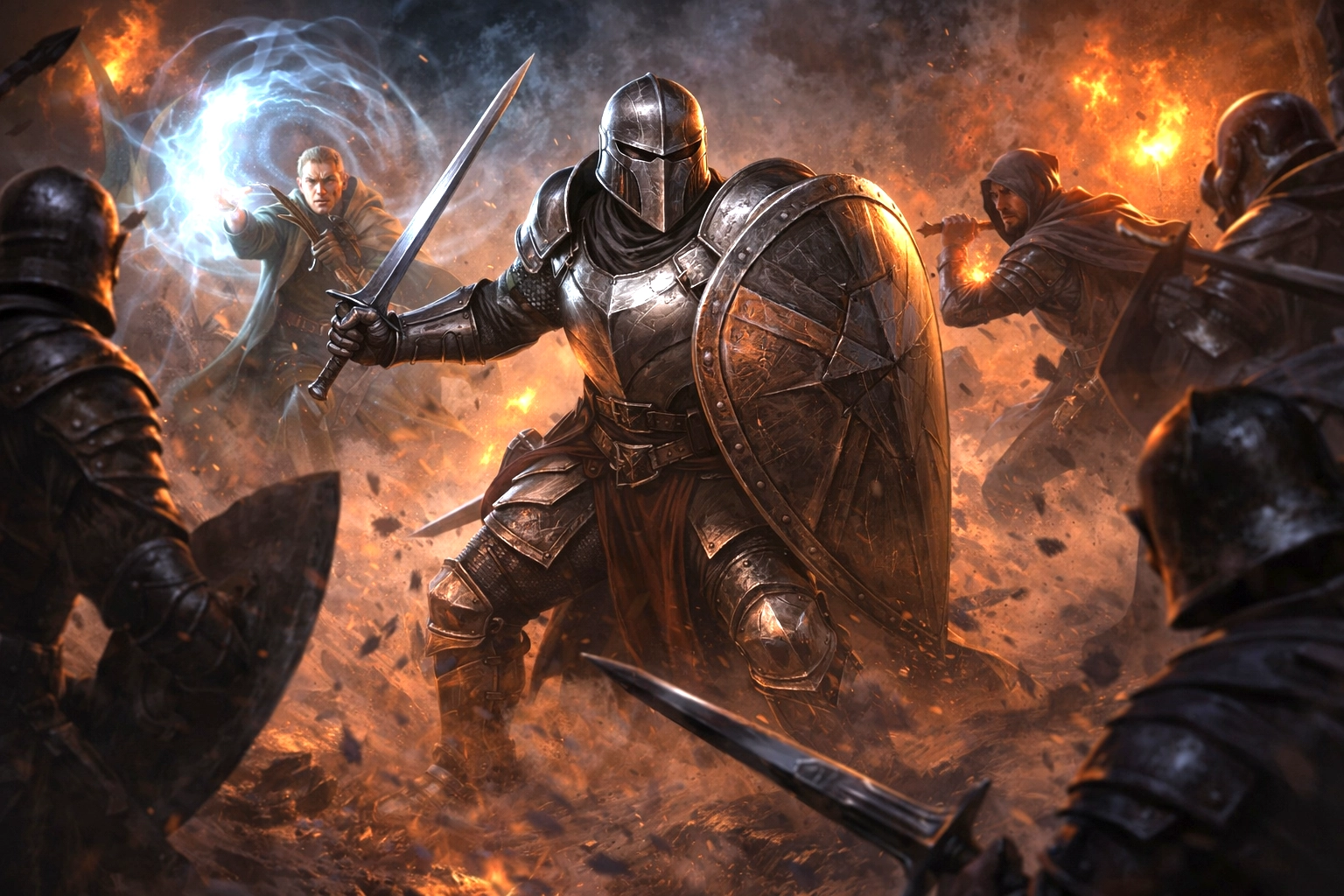
Fighter: The Tactical Anchor That Holds the Line
There’s a moment that happens in almost every long-running Dungeons & Dragons campaign. The party has pushed deeper than they should have. Resources are running low. The wizard has one spell slot left. The cleric is deciding whether to save their last healing spell or prepare for the next fight. The rogue is already eyeing the back door. And standing between the party and the thing coming down the corridor is the fighter.
Not the flashiest class at the table; not the most magical; not the one rewriting reality with ninth-level spells; but the one who quietly decides whether the party survives the next ten minutes.
“The fighter isn’t the loudest voice at the table, but they’re often the reason the story continues.”
In the 2024 ruleset, the fighter remains one of the most stable and reliable classes in the entire game. When built well, it scales smoothly from Level 1 through Level 10, contributes meaningfully in every encounter, and anchors the party in ways that few other classes can match.
The danger with fighter builds, however, is not weakness. It’s excess. Too many builds push fighters into explosive nova turns, Action Surge combinations designed to end encounters instantly. Those builds can be exciting, but they also create strange pacing problems at the table. When the fighter’s power is concentrated into a handful of short-rest bursts, the class begins to feel uneven.
One encounter ends instantly. The next feels flat. For a long-form campaign, especially one running through the Tier 1 and Tier 2 levels where most play actually occurs, consistency matters more than spikes. That’s the philosophy behind the build we’re exploring here.
This is the Tactical Anchor Fighter, a character designed not to dominate a single round of combat, but to control the battlefield across an entire campaign.
Building Better Characters
Great characters aren’t built in a single step; they’re shaped over time.
This three-part series explores how to create a character that not only works on paper, but thrives across an entire campaign:
Part 1: Smart Mechanical Choices That Scale
Part 2: Meaningful Character Identity That Drives Play
Part 3: Table Integration and Long-Term Character Success
Start where you are, or follow the full journey.
The Role of the Fighter in the 2024 Game
Before we talk about mechanics, it’s worth discussing what the fighter is actually for.
In many parties, the fighter becomes the character who stabilizes chaos. When monsters break formation, the fighter intercepts them, when enemies rush the backline, the fighter holds them off, and when positioning becomes the difference between victory and disaster, the fighter quietly reshapes the battlefield.
“In a long campaign, consistency will always outlast spectacle.”
The 2024 rules strengthen this identity in subtle ways. Weapon Mastery, tactical positioning, and consistent attack progression give fighters tools that reward smart play rather than resource dumping. This means the most satisfying fighter builds tend to focus on control, reliability, and positioning, rather than chasing the highest possible damage number, and that’s where the Tactical Anchor comes in.
The Tactical Anchor Fighter
“This build doesn’t win one round of combat. It wins the whole campaign.”
The Tactical Anchor is a Strength-based sword-and-shield fighter built around battlefield stability. This character’s job is simple: Hold the line, shape the fight. Keep the party alive.
Rather than chasing burst damage, the Tactical Anchor focuses on:
- Reliable attack accuracy
- High durability
- Battlefield control through maneuvers
- Tactical positioning
- Consistent contribution every round
In other words, the kind of character a party learns to rely on.
At the Table: The Tactical Anchor in Play
This fighter doesn’t feel flashy, but they always feel important. You’ll notice:
- Enemies hesitate to move past you
- Allies position around you instinctively
- The DM starts accounting for your presence
If your party starts saying, “Stay near the fighter,” you built this right.
Ability Scores: Building a Stable Foundation
For this series, we assume Point Buy as the primary method for ability scores. This keeps builds consistent across tables while allowing meaningful customization.
A strong starting array for the Tactical Anchor looks like this:
| STR | CON | DEX | WIS | INT | CHA |
|---|---|---|---|---|---|
| 16 | 16 | 12 | 12 | 10 | 8 |
This spread accomplishes several important things.
First, Strength 16 ensures the fighter begins with reliable attack accuracy. Fighters make many attacks over the course of a campaign, and missing repeatedly can quickly make the class feel underwhelming.
Second, Constitution 16 dramatically improves survivability. Fighters already have strong hit dice, but durability becomes especially important when the character’s role involves standing in front of enemies.
The modest Wisdom 12 is also more important than it might appear. Fighters who dump Wisdom often become liabilities during exploration and perception checks. Maintaining a reasonable Wisdom score keeps the character functional outside combat.
Dexterity at 12 provides a small initiative boost and helps with common saving throws without pulling resources away from the build’s core identity.
Quick Build Snapshot (2024 Rules)
- Primary Stat: Strength
- Secondary Stat: Constitution
- Key Skills: Athletics, Perception
- Combat Role: Frontline control and durability
- Play Pattern: Consistent pressure, positional control
This is your “no surprises, always works” fighter.
Standard Array Alternative
For tables using the Standard Array, the Tactical Anchor translates cleanly.
Start with:
15, 14, 13, 12, 10, 8
Then assign them as follows:
| STR | CON | DEX | WIS | INT | CHA |
|---|---|---|---|---|---|
| 15 | 14 | 13 | 12 | 10 | 8 |
With the flexible ability increases provided by a background, apply:
+2 Strength
+1 Constitution
This results in a Strength score of 17 and a Constitution score of 15. The first Ability Score Improvement can then bring those values to Strength 18 and Constitution 16, creating an exceptionally durable fighter by early Tier 2.
Background Synergy
Under the 2024 origin system, backgrounds carry significant mechanical weight.
For the Tactical Anchor fighter, the goal is simple: reinforce the character’s identity as a capable physical presence while expanding their usefulness outside combat.
Backgrounds that support this build often provide:
- Strength or Constitution bonuses
- Athletics proficiency
- Perception or Insight
A Guard, Soldier, or similar martial background fits the archetype naturally. Athletics helps the fighter engage in grappling, climbing, and physical challenges during exploration. Perception ensures the character contributes to situational awareness during travel and dungeon crawls.
If your table allows a custom background, a clean combination might include:
- +2 Strength
- +1 Constitution
- Athletics proficiency
- Perception proficiency
- Vehicles (Land) or a gaming set tool
The result is a fighter who remains relevant during exploration scenes rather than fading into the background.
Backgrounds Are Quiet Power
For this fighter:
- Athletics keeps you active in exploration
- Perception keeps you relevant outside combat
You’re not just the wall, you’re part of the world.
The Core Loop of the Tactical Anchor
Every well-designed character has a core loop, a set of actions that define how they function during play. For the Tactical Anchor fighter, that loop focuses on positioning and consistency.
At the start of combat, the fighter establishes position between enemies and vulnerable party members. From there, the turn sequence becomes straightforward.
Attack with your primary weapon. Apply Weapon Mastery effects where appropriate. If the battlefield begins to shift, use maneuvers to reposition enemies or support allies.
Rather than waiting for the perfect moment to unleash a massive burst of damage, the Tactical Anchor applies pressure every round. Enemies attempting to bypass the fighter risk opportunity attacks. Enemies focusing on the fighter quickly discover that durability and positioning make them difficult to remove.
Over time, the fighter shapes the flow of combat in subtle but powerful ways.
“I don’t chase enemies. I decide where the fight happens.”
Weapon Mastery Isn’t Damage: It’s Control
In the 2024 rules, Weapon Mastery isn’t just about hitting harder, it’s about:
- Forcing movement
- Denying positioning
- Controlling space
If you’re only thinking about damage, you’re leaving power on the table.
Choosing the Right Subclass
Several fighter subclasses can support this philosophy, but one stands out clearly. Battle Master remains one of the most satisfying subclasses in the game because it rewards tactical thinking without overwhelming the player with complexity.
Battle Master maneuvers allow the fighter to:
- Disrupt enemy positioning
- Protect allies
- Manipulate advantage
- Control the battlefield
Importantly, these abilities scale smoothly with level. Superiority dice increase in power as the fighter advances, ensuring the subclass remains relevant without requiring complicated resource management.
“The Battle Master doesn’t just fight enemies, it controls the terms of the fight.”
Unlike spellcasting subclasses, the Battle Master doesn’t introduce additional ability score pressures. Strength and Constitution remain the build’s priorities, keeping progression clean and predictable.
For long campaigns, that simplicity is a strength.
Don’t Save Maneuvers, Spend Them
New Battle Masters often hoard superiority dice. Don’t. Use maneuvers to:
- Fix bad positioning
- Protect allies early
- Control momentum
Unused dice are wasted control.
Why Not Champion?
Champion is the simplest fighter subclass, and it works perfectly well in many campaigns, however, for long-term engagement it can feel too passive.
Champion’s features mostly improve numbers rather than expanding decision space. The result is a character who functions reliably but rarely makes interesting tactical choices.
For players who enjoy a streamlined experience, Champion remains viable. But for a build focused on campaign longevity, Battle Master offers far more variety without sacrificing reliability.
Managing Action Economy
One of the most common mistakes in fighter builds is accidentally overloading the action economy. Because fighters gain powerful features like Action Surge, it can be tempting to stack additional abilities that all compete for the same action types.
The Tactical Anchor build intentionally avoids these conflicts. Bonus actions remain mostly unused, allowing flexibility if the character later gains features that rely on them.
Reactions are reserved primarily for opportunity attacks and defensive responses. This restraint may seem subtle, but it keeps the fighter flexible across many different encounter types.
The Action Surge Trap
Action Surge is one of the most iconic abilities in the game. It’s also one of the easiest ways to accidentally distort a fighter build. When players design characters entirely around explosive Action Surge turns, they often create a strange rhythm at the table.
One combat ends instantly., while the next feels underwhelming because the fighter’s defining moment has already passed.
“Action Surge is a tool, not an identity.”
The Tactical Anchor approach treats Action Surge differently. Instead of being the centerpiece of the character, it becomes tactical insurance. If an enemy suddenly threatens the backline, Action Surge allows the fighter to intercept them.
Action Surge Is Insurance
If you’re waiting for the “perfect moment,” you’re using it wrong. Use Action Surge when:
- The line is about to break
- An ally is exposed
- The fight is slipping
It’s not your spotlight; it’s your safety net.
If the party needs to finish a dangerous foe quickly, Action Surge provides the extra pressure, but the fighter’s identity doesn’t depend on it. This keeps combat pacing smooth and prevents the class from feeling inconsistent.
Avoiding Mechanical Traps
Fighter builds often stumble into a few predictable traps. The most common is dumping Wisdom entirely. While it may seem harmless at first, poor Wisdom scores quickly become noticeable during exploration and perception checks.
Another trap involves chasing pure damage increases at the expense of survivability or tactical flexibility. Damage matters, but fighters contribute just as much through positioning and battlefield control.
“The best fighters aren’t remembered for what they killed; they’re remembered for what they prevented.”
Finally, many players underestimate the importance of initiative. Acting earlier in combat allows the fighter to establish position before enemies threaten the party. Maintaining a modest Dexterity score helps prevent the character from always reacting instead of leading.
Common Fighter Pitfalls
- Dumping Wisdom: you miss everything important
- Overbuilding for damage: you lose control
- Ignoring initiative: you’re always reacting
- Hoarding resources: you feel weaker than you are
Fix these, and the class clicks immediately.
The Fighter’s Place in a Campaign
In the end, the Tactical Anchor fighter embodies a simple truth about long-running campaigns. Consistency matters.
A character who contributes meaningfully in every encounter often proves more valuable than one who dominates occasionally.
From the DM’s Chair
A well-built fighter changes encounter design. As a DM, you’ll notice:
- Frontlines become meaningful again
- Positioning matters more
- Enemies must think, not just attack
This build doesn’t break encounters, it makes them better.
The fighter who holds the corridor while the wizard prepares a spell; the fighter who keeps the monster focused while the rogue circles behind; the fighter who stands up again after a brutal hit and simply refuses to move. These moments rarely produce the biggest damage numbers on the table, but they are the moments that make parties succeed. And in a long campaign, success is rarely about a single spectacular turn; it’s about the characters who show up, round after round, and keep the story moving forward.
The Tactical Anchor fighter does exactly that.
“Round after round, the fighter holds the line, and the story holds together because of it.”
Find Your Role at the Table
Every class in D&D answers a different question:
- Who holds the line? → Fighter
- Who rewrites the rules? → Wizard
- Who applies pressure? → Barbarian
- Who keeps the party standing? → Cleric
- Who hunts and controls the edges of the fight? → Ranger
- Who strikes at the perfect moment? → Rogue
- Who leads from the front with purpose and presence? → Paladin
- Who adapts with nature and flexibility? → Druid
- Who trades risk for power? → Warlock
- Who channels raw magic into explosive potential? → Sorcerer
- Who controls the flow of combat through movement and discipline? → Monk
- Who elevates the entire party? → Bard
This series is built to help you choose more than a class—
It helps you choose how you show up at the table.