Dragon Heist • DM Diary
Why I Chose the Alexandrian Remix for Dragon Heist
The Alexandrian Remix didn’t make the players the center of the universe. It made the universe worth caring about.
Why?
When I first started preparing to run Dragon Heist, I did what I usually do with any published adventure: I read the book, skimmed reviews, and spent a fair amount of time listening to other DMs talk about what worked, and what didn’t, at their tables.
It didn’t take long before one concern surfaced again and again.
The villains.
Specifically, the way Dragon Heist asks the Dungeon Master to choose one primary villain and effectively remove the other three from the campaign.
On paper, I understood the design intent. The adventure is modular. It’s meant to be replayable. Different seasons, different antagonists, different tones. That’s clever.
But Waterdeep is a city defined by overlapping power structures, secret alliances, and dangerous people constantly working at cross-purposes. The idea that three major factions would simply stop existing because I checked a different box in Chapter One didn’t sit right with me.
At the same time, there was another concern quietly bothering me.
This adventure is called Dragon Heist.
And yet, by many accounts, it doesn’t actually contain a heist.
What Is the Alexandrian Remix?
The Alexandrian Remix of Dragon Heist, created by Justin Alexander, restructures the adventure so that all four major villains and their factions operate concurrently rather than being selected one at a time.
The Remix emphasizes:
- Multiple active antagonists
- Node-based investigation instead of linear clue chains
- Factions acting off-screen
- A city that continues to evolve with or without player involvement
The result is a campaign that is more resilient, reactive, and capable of surviving unexpected player choices.
You can read Justin’s reimagining of Dragon Heist here: Dragon Heist: The Alexandrian Remix
What struck me immediately about the Alexandrian Remix wasn’t its complexity; it was its worldview.
The world does not revolve around the characters, but their choices absolutely matter.
Cities don’t wait. The factions don’t pause politely. Events unfold whether the party is paying attention or not.
That sense, that the city exists independently of the party, was something I wanted both the kids and the adults at my table to feel early and often.
Why This Mattered for a Mixed-Age Table
My table includes kids. When we started, they were eleven and twelve. They’re a little older now, but the energy is still very much there.
They test boundaries. They experiment. They mess around.
Instead of rails, the Alexandrian Remix gives you currents. The water keeps moving, no matter what the players do.
Missed clues don’t stall the campaign. Ignored hooks don’t break the story. Chaos doesn’t derail the plot; it becomes part of it.
Waterdeep as a Character
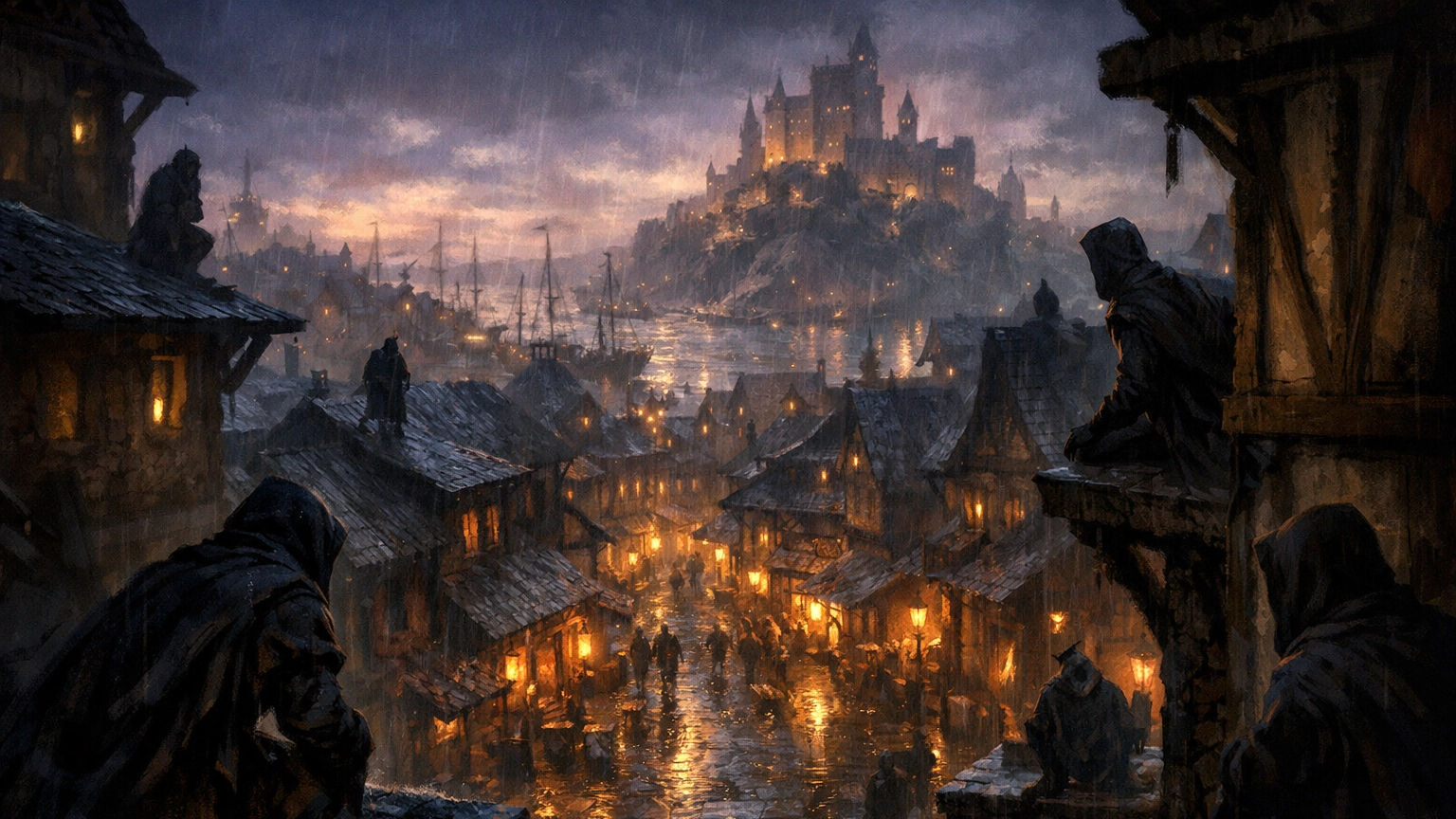
From the very beginning, I wanted Waterdeep to be more than a backdrop. I wanted it to be a character.
Guild representatives arrive unannounced. Neighbors have opinions. Bar fights spill into the street. Broadsheets appear on the doorstep whether the party has earned headlines or not.
Sometimes the city reacts to the party. Sometimes it doesn’t, and that absence matters just as much.
What I Haven’t Cut … Yet
At this stage of the campaign, I haven’t meaningfully cut anything from the Alexandrian Remix.
The party has been in Waterdeep for four days. Three of those were spent renovating Trollskull Manor and meeting guild representatives. The pressure points haven’t arrived yet.
One Piece of Advice for Other DMs
Make a plan. Then make another plan. Then make a third.
And be ready to throw them all away.
The Alexandrian Remix didn’t make the players the center of the universe. It made the universe worth caring about.
Let players experiment. Let them mess up. Respond with consequences, not punishment. Teach through outcomes, not restrictions.
Remixing Waterdeep
This article is part of an ongoing series exploring how I adapted Dragon Heist using the Alexandrian Remix, original material, and table-driven decisions.
Upcoming topics include the Fireball arc, multi-faction heists, and what I eventually cut, and why. You can find these and more as part of my broader Behind the Screen exploration of campaign design and narrative structure.