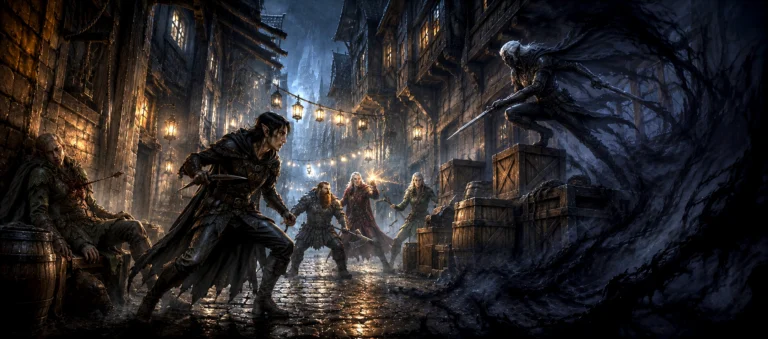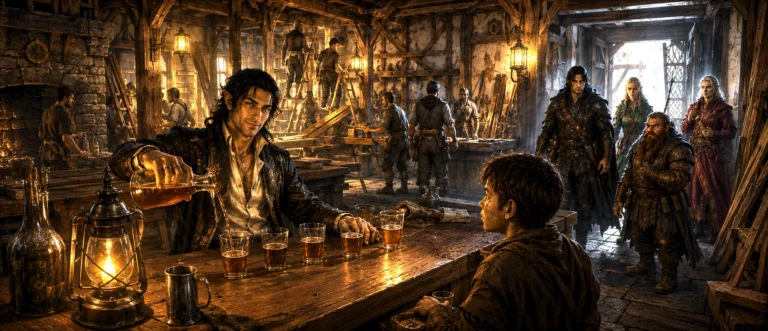
Voxels & Valor • DM Diary • The Aetherian Arc
More than I Could Chew-and Worth It
Running the Aetherian Arc
There’s a particular kind of campaign arc that looks perfect on paper and turns out to be more than you can chew once the dice hit the table.
You know the one: Clean entry point. Modular quests. Escalating danger. A clear Big Bad waiting patiently at the top of the mountain while the party learns the world, gathers strength, and earns their confidence the right way.
The Aetherian Arc, Sessions 5 through 12 of Voxels & Valor, was exactly that kind of arc.
And then the party sprinted past the tutorial, punched the dragon in the face far earlier than intended, and walked away convinced they had solved the world.
Sometimes the party doesn’t break your story; they reveal what it actually is.
This is the story of why that happened, what I planned instead, and why, despite everything, I wouldn’t change how it played out.
The Plan: A World Built to Be Learned
Aetheria began as an experiment, born, as many ambitious campaigns are, from a new DM with grand ideas and more enthusiasm than restraint.
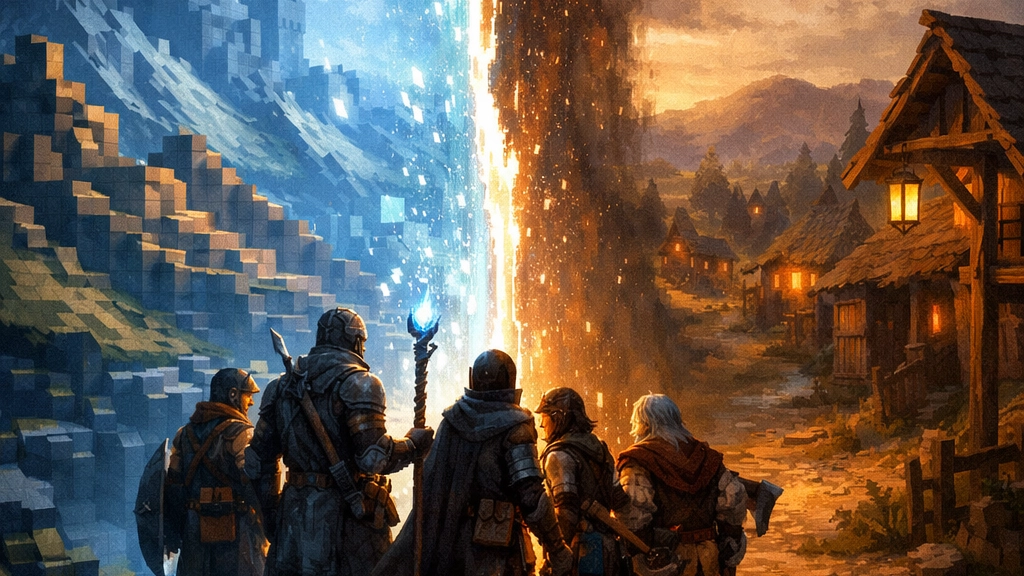
The intent was never for Dragon of Icespire Peak to replace Lost Mine of Phandelver. The two campaigns were meant to run concurrently: parallel stories unfolding side by side. A portal-connected detour. A secondary world the party could step into, explore, and step back out of without derailing the main thread.
Aetheria itself was a reskinned playthrough of Dragon of Icespire Peak, framed through a Minecraft-inspired voxel lens. The goal was simple: use a familiar structure in an unfamiliar aesthetic to teach pacing, escalation, and caution, lessons the party could then carry back into Phandalin.
DM Note: I didn’t just want a side quest. I wanted a second campaign running in parallel. New DM. Grand ideas. More than I could chew. I went for it anyway.
Aetheria wasn’t meant to be rushed. It was meant to be understood.
Confidence Came Through the Portal Too
What I underestimated wasn’t the party’s experience.
It was their sense of trajectory.
They didn’t arrive in Aetheria having finished Lost Mine of Phandelver. They arrived mid-story, goals unfinished, threats unresolved, a larger narrative still waiting patiently back in Phandalin.
But they believed they knew where that story was going.
That belief mattered.
The voxel aesthetic, meant to feel strange and playful, had an unintended effect: it made the world feel readable. Blocks suggest systems. Systems suggest mastery. And mastery encourages decisive play.
By the time they reached Voxelhaven, the party wasn’t asking, “Are we ready for this?” They were asking, “Why wouldn’t we be?”
Warnings Were Given. They Were Understood. They Were Accounted For.
If this arc has a quiet antagonist, it isn’t the dragon.
It’s certainty.
The world tried to slow them down. Illusions misled. Dungeons lied. Environmental storytelling telegraphed danger long before blades were drawn, frozen creatures dotting the landscape as the party climbed higher, thicker, closer together.
The party noticed. They discussed it. They adjusted. And then they kept going anyway.
Table Lesson: This wasn’t recklessness. Recklessness ignores risk. This was a group that evaluated the warnings and decided the danger was acceptable.
The modular design of Dragon of Icespire Peak assumes hesitation: sampling danger, retreating, reassessing, and returning later.
This table doesn’t retreat once they believe they understand the board.
The Moment the Arc Collapsed (and Became Something Else)
The Aetherian Arc didn’t collapse when the dragon appeared.
It collapsed earlier, when the party decided the Hold had no second act.
They entered believing there would be no reinforcements, no retreat, no escalation beyond this fight. Once that belief settled in, the arc compressed instantly. Not because the module failed, but because the party closed the decision tree themselves.
Once they believed there was no second phase … the arc became a sprint.
At that point, my role shifted. I wasn’t teaching pacing anymore. I was adjudicating consequences.
And then the dice got involved.
When Dice Undercut, and Occasionally Reinforce, Theme
The dragon fight should have been terrifying.
On paper, it was.
In practice, the dice had other plans.
Missed attacks. Failed saves at exactly the wrong moment. A breath weapon that refused to recharge. And, of course, the owl, an innocent, well-rolled familiar that quietly dismantled tension before it ever had time to take root.
There was one moment, just one, where fear landed. A single breath attack that dropped a character and reminded everyone what they were actually facing.
Then the moment passed.
Some of the comedy was earned. Some of it, like a misapplied movement ruling on the ice, was introduced by my own mistake. The table leaned into both. Laughter replaced panic, and the fight never fully recovered its teeth.
DM Reminder: Sometimes the dice sabotage theme. Sometimes they affirm it. Either way, the table will follow the emotion that lands first.
Victory Is a Dangerous Teacher
The most important part of the Aetherian Arc didn’t happen during the battle. It happened afterward.
Dragon harvesting followed, not as trophy-taking, but as research. Specific questions were asked. Rolls were made. The results were generous without being absurd. The dragon wasn’t just a problem removed; it was a resource cataloged.
Magic items came next. Cleanly. Deliberately. Each one reinforcing who a character already was, not pulling them somewhere new. No negotiation. No redistribution drama. Just alignment between design and expectation.
Victory didn’t make them cruel; it made them efficient.
When Competence Stops Asking Permission
Session 12 is where the arc truly settled. Not with another boss fight, but with comfort.
- Comfort exploring crypts.
- Comfort looting the dead.
- Comfort wearing the label “murder hobo” without irony or defensiveness.
And then, comfort making a decision that should have carried more weight.
Guards were silenced not in panic, but in consensus. There was no argument, just a pause, a choice, and immediate action. When consequences finally arrived, they didn’t come as moral reckoning or epic confrontation.
They came as alarms, screams, collapsing tunnels, and a frantic retreat. The party ran laughing.
Hard Truth: They didn’t become villains. They became comfortable. And that’s far more interesting.
Why I Wouldn’t Change a Thing
Aetheria didn’t end with a moral reckoning.
It ended quietly.
The portal closed. The blocky world was left behind. And the party found themselves back in Phandalin, exactly where they had left off in Lost Mine of Phandelver. Some time had passed, but: Same town. Same unfinished story. Same dangers waiting patiently.
The world they had conquered was gone.
What remained was the belief they carried with them.
They returned not as heroes who had completed a journey, but as adventurers convinced that they understood how journeys worked. That certainty, earned or not, now sat at the heart of the campaign.
Aetheria wasn’t a detour. It was a mirror.
And when the party stepped back into Phandalin, they didn’t leave that reflection behind.