DM Corner • Series • So, You Want to Be a DM
Heroic Maps: Designing for the Table, Not Just the Screen
After more than a decade of mapmaking, Joe and Sarah of Heroic Maps have built a catalogue that DMs keep coming back to—for one simple reason: the maps actually work in play.
Why Heroic Maps Matters to DMs
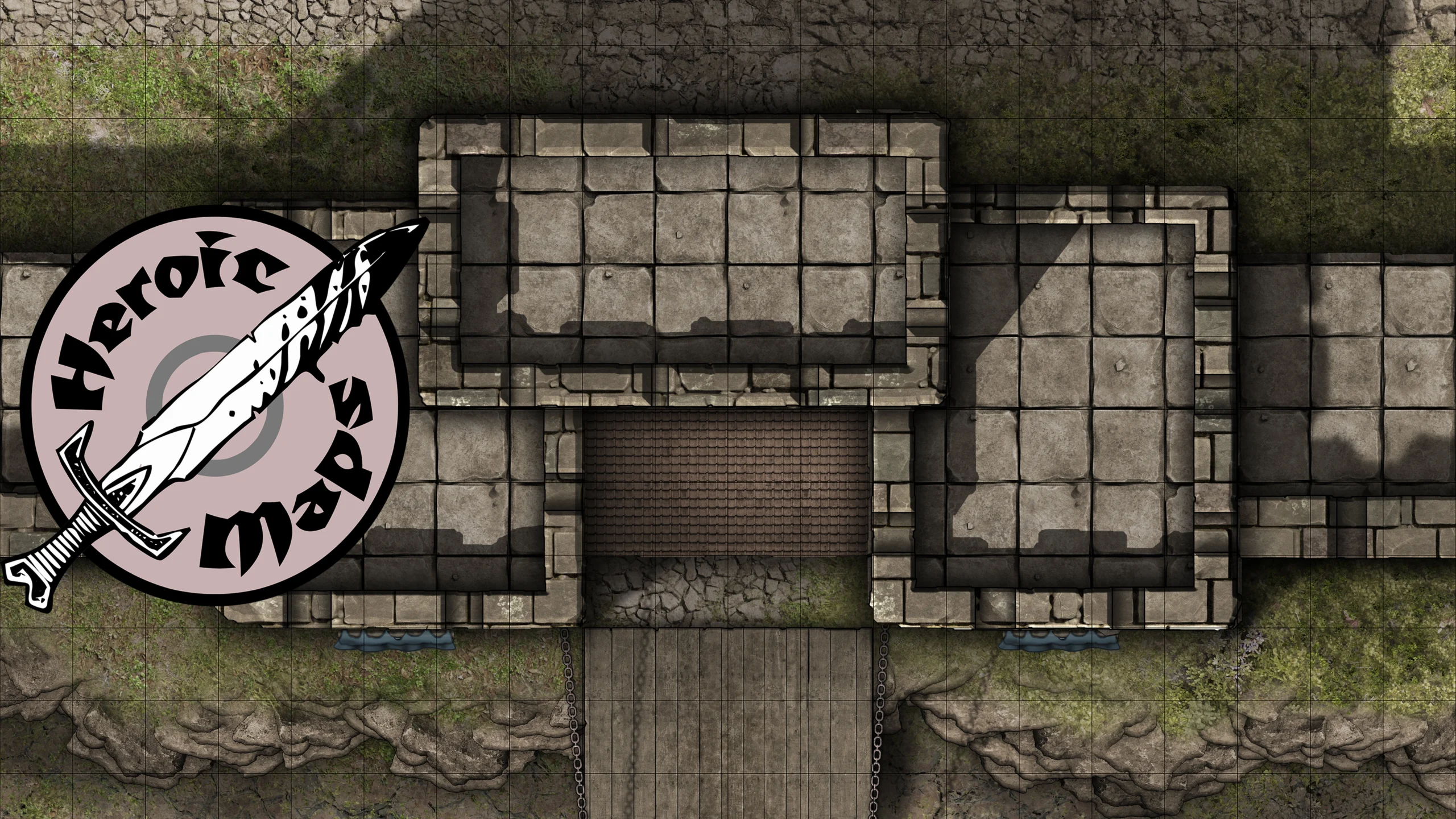
After more than a decade of mapmaking and a catalogue that now spans over two thousand locations, Heroic Maps has earned a reputation for something deceptively simple: maps that actually work at the table.
Founded in 2013 by Joe and Sarah, Heroic Maps has quietly become one of the most reliable resources for Dungeon Masters looking for locations that feel lived-in, flexible, and reusable across entire campaigns. While many maps impress at first glance, Heroic Maps distinguishes itself by asking a different question: How will this be used during play?
“Unless a GM can see how that map could fit in their game, a cool location might not be a useful map.”
— Joe, Heroic Maps
Function and Story, Built Together
When asked whether map design begins with function or theme, Joe describes the process as intentionally fluid. Sometimes a map starts with a practical need, a location DMs routinely require, such as a multilevel dungeon, a boss-fight arena, or a modular wilderness space. Other times, inspiration comes from a real-world location, a scene from fiction, or a visual idea that sparks curiosity.
In either case, the goal is the same: ensure the map is immediately useful to a GM. A visually striking location only becomes a successful map once a DM can clearly imagine how it fits into a campaign. Likewise, a mechanically useful space benefits from atmosphere and story. Heroic Maps bridges that gap by allowing function and theme to develop together ensuring neither is sacrificed.
That balance is evident in how often GMs report that a single Heroic Maps location has inspired not just an encounter, but entire sessions, or even full campaigns.
Designing for Reuse, Not One-Off Moments
With such a vast catalogue, reusability isn’t an afterthought, it’s foundational. Certain locations appear in nearly every campaign: taverns, towns, wilderness paths, and places that are dark in the way that makes players lean forward at the table.
Heroic Maps aims to make these spaces feel believable and detailed without becoming so specific that they can only be used once. “Generic,” in this context, doesn’t mean empty or bland. It means adaptable.
“We have plenty of maps that are suitably generic… not bland and empty. They’re flexible enough that they fit into many different locations and campaign settings.”
— Joe, Heroic Maps
Variants play a key role here. Seasonal changes, day/night versions, and intact/ruined states all allow a single location to evolve over time. A militia barracks might be visited peacefully during the day, infiltrated at night, and revisited months later under siege. The map remains the same place, but the story around it changes.
Using Heroic Maps in Dragon Heist
Waterdeep: Dragon Heist places a heavy emphasis on recurring locations, spaces the party returns to again and again as relationships deepen and consequences unfold. That makes map reusability especially valuable.
In my own Dragon Heist campaign, Heroic Maps has been particularly effective in three key ways:
- Trollskull Manor & Trollskull Alley
These locations quickly become the party’s home base, social hub, and narrative anchor. Consistent, readable maps help reinforce a sense of place as the party renovates, negotiates, and navigates neighborhood tensions across multiple sessions. - Urban Encounters That Evolve
Waterdeep’s locations often change meaning rather than geography. Flexible street and interior layouts make it easy to reuse the same space under different circumstances without it feeling repetitive. - Set-Piece Moments with Clear Flow
Later moments benefit from maps that support tension and movement without overwhelming the table, especially in physical or hybrid setups where clarity matters more than spectacle.
DM Note: Dragon Heist rewards continuity. Maps that feel lived-in and adaptable reinforce the city as a persistent place rather than a series of disconnected scenes.
From Printed Maps to Hybrid Tables
Heroic Maps’ approach has evolved alongside how DMs play. When the studio began in 2013, most maps were printed and placed directly on tables. Early designs reflected those constraints: smaller dimensions, print-friendly palettes, and layouts that fit common table sizes.
As virtual tabletops grew in popularity, and especially during the surge in online play around 2020, Heroic Maps adapted. VTT-specific versions became standard, and map size was no longer limited by physical space. Larger, more complex environments became viable, allowing for richer terrain and more expansive scenes.
“One big change is the size of maps—there’s far less of an issue with a large map on VTT. That’s allowed us to tackle larger and more complex maps.”
— Joe, Heroic Maps
Despite this shift, physical play was never abandoned. Smaller maps, modular or geomorphic sets, and print-at-home options remain core offerings. The result is a catalogue that supports physical tables, VTTs, and increasingly common hybrid setups that blend both worlds.
Why Dungeons Still Matter
After designing hundreds of environments, one location type still stands out for Joe: the dungeon. Dungeons offer infinite variety, from their themes and layouts to the stories they suggest. They invite weathering, debris, narrow passageways, and environmental storytelling, elements that help players imagine themselves descending into the unknown.
“Despite designing hundreds, I always enjoy doing a dungeon! There’s infinite variety… and picturing a party venturing down a narrow, cobwebbed filled passageway is cool.”
— Joe, Heroic Maps
Why Heroic Maps Endures
Heroic Maps has lasted not because it chased trends, but because it stayed focused on how games are actually run. By prioritizing usability, reusability, and adaptability, Joe and Sarah have built a catalogue that grows alongside campaigns rather than being consumed by them.
For Dungeon Masters looking to invest in maps they can return to again and again, whether at a physical table, a virtual one, or somewhere in between, Heroic Maps continues to be a cornerstone resource.
Creator: Heroic Maps (Joe & Sarah Bilton)
Where to find them: heroicmaps.com • DMs Guild • Patreon
Disclosure: Heroic Maps provided complimentary map files for review purposes. This spotlight reflects my own experience using the maps in active play and was not sponsored, directed, or pre-approved by Heroic Maps.