Homebrew • DM Tips • Character Building
Using Color Rings on D&D Beyond’s Maps VTT Effectively
How to build a character that belongs at the table, and thrives across a long campaign
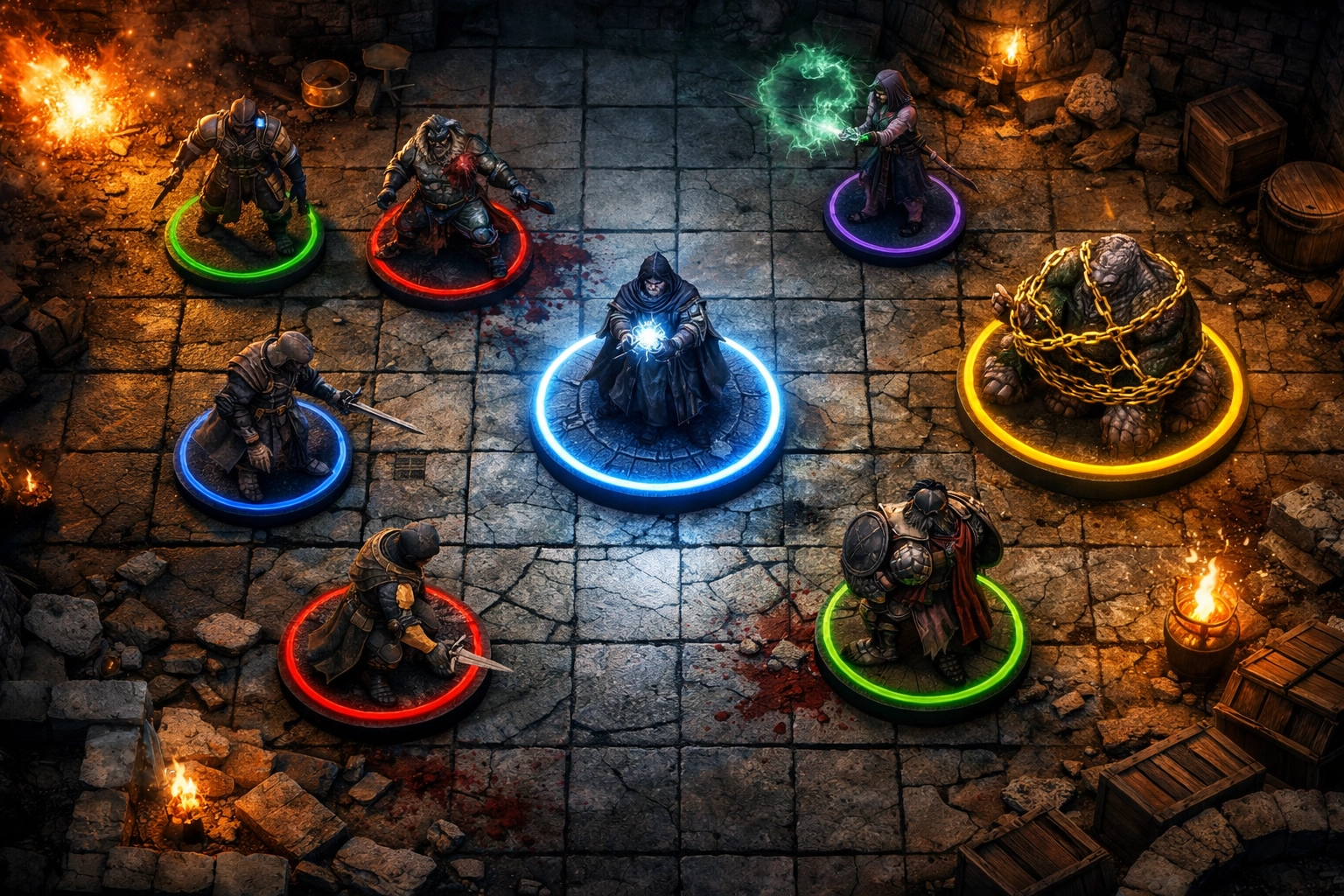
When I first started using the Maps VTT in D&D Beyond Maps VTT, I treated color rings like most DMs probably do, something cosmetic, maybe useful for distinguishing tokens, but not essential.
That didn’t last long. Once combat got busy, and with a table like mine, it always does, I realized something quickly: The map wasn’t just a battlefield. It was an information problem.
“The map wasn’t just a battlefield. It was an information problem.”
Between conditions, concentration spells, buffs, and status effects, I was juggling more than the initiative tracker could reasonably carry. And while Maps does a great job displaying turn order clearly across the top of the screen, that only solves one piece of the puzzle.
Color rings, used intentionally, solve the rest.
What Color Rings Are (and What They Aren’t)
Let’s get this out of the way first: Color rings are not a replacement for the initiative tracker.
Maps already handles initiative cleanly and visibly. Players can see exactly when their turn is coming, and that system works well.
Color rings shine in a different role: They track battlefield state, the things initiative doesn’t show.
- Who is concentrating
- Who is restrained
- Who is marked
- Who is buffed
- Who is barely standing
That’s where they become powerful.
“Color rings don’t track turns; they track what’s happening between them.”
The Best Use: Condition Tracking
What Color Rings Are Best For
- Concentration tracking
- Conditions (grappled, charmed, etc.)
- Buffs and debuffs
- Marked targets
Not initiative, not enemy roles, not hidden DM signals.
At my table, color rings are used primarily for one thing: Tracking conditions and temporary combat states.
Not enemy types, not tactical roles, not DM signaling. Just conditions.
Why? Because conditions are where combat becomes messy.
In a typical encounter in Dungeons & Dragons 5th Edition, you might have:
- two creatures concentrating
- one restrained
- one charmed
- a marked target
- multiple buffs in play
Trying to track all of that mentally, or in notes, slows everything down.
Color rings make it instant.
The 11-Color Condition System
With 11 available colors in Maps, you can build a complete, intuitive system that covers the most common conditions without cluttering the map.
Here’s the system I use:
The 11-Color System at a Glance
This system is designed to cover the most common combat conditions while staying intuitive and easy to read at the table.
🎯 Color Ring Quick Reference (Maps VTT)
Use color rings to track conditions and temporary battlefield states at a glance.
| Color | Condition | Quick Meaning |
|---|---|---|
| 🔵 Blue | Concentrating | Maintaining a spell |
| 🟣 Purple | Charmed / Dominated | Mind controlled or influenced |
| 🔴 Red | Bloodied | Critically wounded |
| 🟠 Orange | Marked | Target of a feature or spell |
| 🟡 Yellow | Restrained / Grappled | Movement impaired |
| 🟢 Green | Buffed | Benefiting from a positive effect |
| 🌸 Pink | Frightened | Emotionally affected / fear |
| ⚪ White | Invisible / Hidden | Not directly visible |
| ⚙️ Grey | Slowed / Debilitated | Reduced effectiveness |
| ⚫ Black | Unconscious / Dead | Out of the fight |
| 📜 Parchment | Special | Encounter-specific effect |
“If players can guess what a color means without asking, the system is working.”
This works because the colors feel right:
- Red = danger
- Green = positive
- Blue = controlled magic
- Black = out of the fight
Players don’t need to memorize it; they can often infer it.
Why This Works at the Table
There are three big advantages to using color rings this way.
1. Instant Readability
“If you have to ask what’s happening, the map isn’t doing its job.”
At a glance, everyone can see what’s happening.
No asking:
- “Who’s concentrating?”
- “Is that one restrained?”
- “Which one did you mark?”
It’s already on the map.
2. Reduced DM Load
You stop being the only one tracking everything.
Table Rule: Players Track Their Effects
If you create the effect, you track it. This keeps the battlefield accurate without putting everything on the DM.
Which leads to the most important table rule I recommend:
Players manage the rings they create.
- Cast Bless? → assign Green
- Apply Hunter’s Mark? → assign Orange
- Start concentrating? → assign Blue
Now the table shares the responsibility.
3. Faster Combat Flow
“Clarity speeds up combat. Speed keeps players engaged.”
Less clarification means faster turns.
Faster turns mean:
- better pacing
- higher engagement
- less drift at the table
And that matters more than almost anything else in combat.
Keep It Simple
Just because you have 11 colors doesn’t mean you should use all 11 at once. The sweet spot is usually 3–5 active colors in a single encounter. Beyond that, clarity starts to break down.
Don’t Use All 11 Colors at Once
- Aim for 3–5 active colors per encounter
- Too many signals reduce clarity
- Rings should highlight, not overwhelm
Think of rings as temporary signals, not permanent labels.
Narrative Use (Optional, But Effective)
While my table uses maps primarily for combat, there are moments where color rings can reinforce the story.
“Used sparingly, color becomes storytelling.”
Used sparingly, they can highlight:
- a creature under magical domination (Purple)
- a divine effect or protection (Green or White)
- a shadow-touched enemy emerging from darkness (Black)
These are short-lived signals, not standing indicators. But when used well, they add a layer of visual storytelling without saying a word.
A Note on What I Don’t Use Rings For
There are two common uses you’ll often see suggested that I intentionally avoid at my table:
Enemy Type Indicators
- Red = hostile
- Green = players
- Yellow = neutral
Enemy Role Indicators
- Purple = caster
- Orange = skirmisher
- Red = frontline
These can be useful when teaching a new group or introducing players to a VTT, but over time, they start to do something I don’t want: They show the DM’s hand.
If players can identify threats instantly based on color, they don’t need to:
- observe behavior
- react to unfolding tactics
- learn through play
And that’s where a lot of the strategy and tension comes from.
For New Tables: Training Wheels That Work
Training Wheels for New Tables
- Use colors to show allies vs enemies
- Highlight dangerous targets
- Reinforce basic tactics
Then remove these cues as your table gains experience.
That said, if you’re running a new group or introducing players to Maps for the first time, color rings can absolutely help.
“The moment color tells players what to do, it takes away their chance to figure it out.”
As a teaching tool, they’re effective. You can use them to show:
- who’s hostile
- who’s allied
- which enemies are dangerous
Just understand that these are training wheels.
As your table grows more comfortable, you may want to remove them and let players read the battlefield organically.
Final Thoughts
Color rings are a small feature. Easy to overlook. Easy to ignore, but when used intentionally, they do something subtle and powerful: They turn your map into a communication tool.
“The goal isn’t to decorate the map—it’s to make it speak.”
Not just a place where combat happens, but a place where information lives, moves, and updates in real time.
And when that happens, everything at the table runs just a little bit smoother.
Ritual at the Table
Like any good table tool, color rings work best when they disappear into the flow of play, quietly doing their job so the story can take center stage.