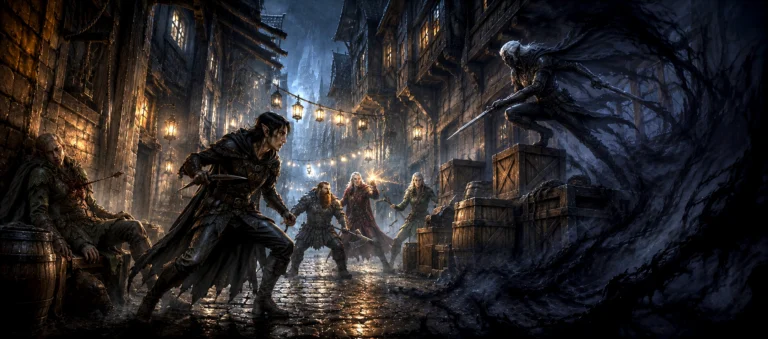
DM Corner • Homebrew Series • Creature Feature
Creature Feature: Scaled Monsters for Real Tables
Scaled monsters built from real table fixes
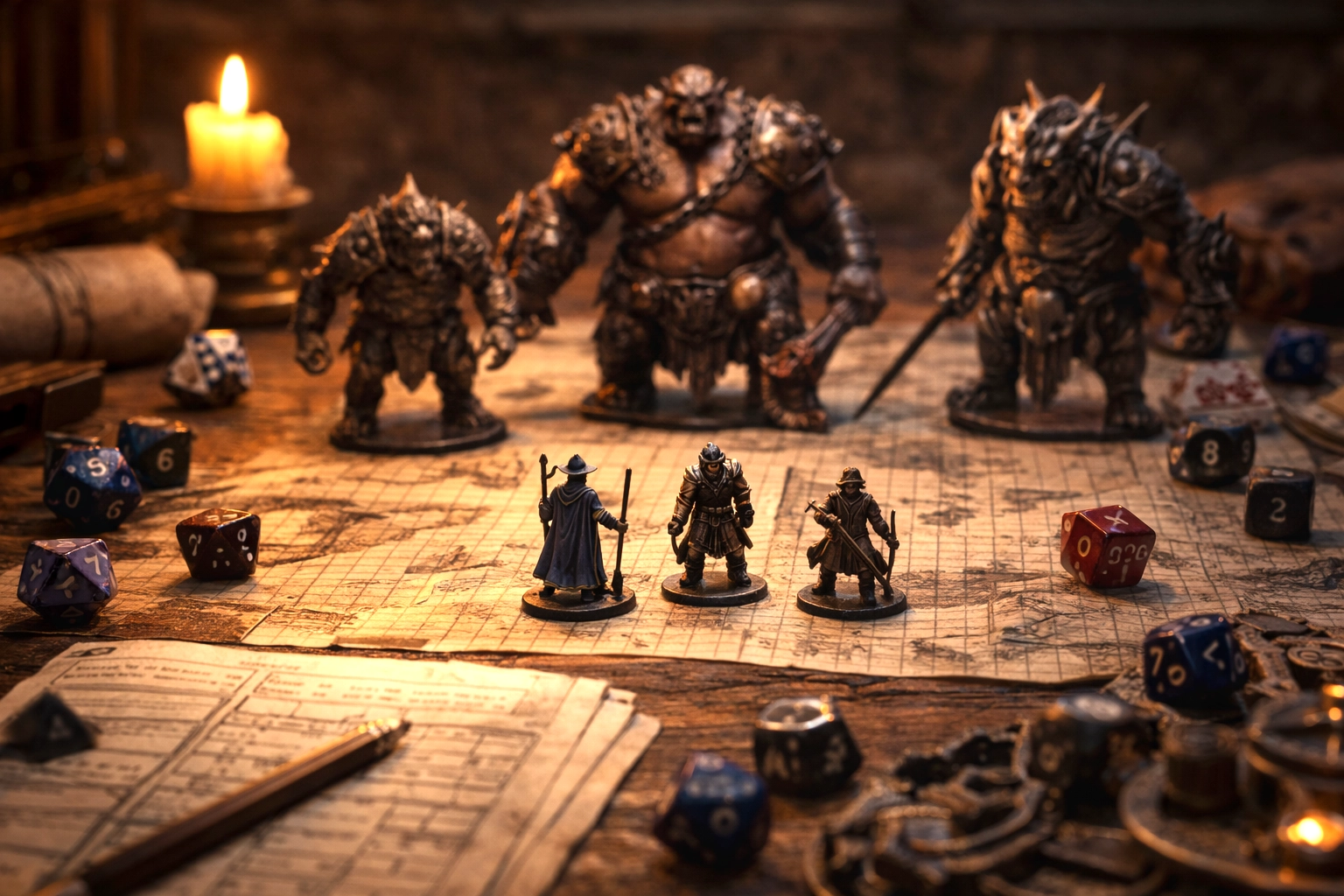
At a certain point in a long-running D&D campaign, something quietly breaks.
Not the story. Not the players. The monsters.
Creatures that once felt dangerous start evaporating. Encounters that were meant to be tense become speed bumps. And no matter how evocative the description or how clever the setup, the fight is often decided before it has a chance to matter.
Creature Feature exists because I kept running into that gap, and fixing it.
Why Scaling Became Routine at My Table
Most of the scaling work in this series exists for one, or usually both, of two reasons.
1) Party Size
My Voxels & Valor campaign runs with six players. On paper, many published adventures are written for four to five, sometimes stretching to “three to six.” In practice, this particular table is durable, coordinated, and efficient. Encounters designed to be challenging are often resolved quickly, with minimal resource drain and very little real pressure.
At first, I compensated the obvious way: adding more enemies. That works, especially when you’re trying to counter a large party’s action economy. But it doesn’t scale cleanly. Once you’re tracking a dozen or more combatants, including the PCs, combat slows down, turns blur together, and tension leaks out of the room.
Practical takeaway: I didn’t want more creatures. I wanted fewer creatures that actually mattered.
2) Party Level
With my Dragon Heist group, the problem looked different. The party size was appropriate, but they started the adventure at level 3 instead of level 1. Many early encounters simply couldn’t keep up. Complicating things further, Dragon Heist is full of tight spaces, sewers, hideouts, cramped interiors, where adding more enemies isn’t just awkward, it breaks the fiction.
Once again, the solution wasn’t quantity. It was quality.
Instead of crowding encounters or inflating numbers blindly, I began tuning individual creatures: increasing survivability, improving action economy, tightening damage profiles, and giving enemies the tools they needed to remain relevant for more than a round or two.
Most of the creatures in this series exist because adding more enemies stopped being fun.
The Creatures Were Already There
Between these two campaigns, I’ve accumulated a working bestiary of over fifty edited and homebrewed creatures.
Some are contextual reimaginings — Minecraft-inspired mobs adapted for D&D play. Others are straightforward upgrades to familiar enemies: goblins by rank, promoted from fodder to threats; creatures that gained structure, intent, and staying power without losing their identity.
None of them were built as theory exercises. They were built because something at the table wasn’t working.
Series promise: These creatures have been run, adjusted, and run again. Creature Feature exists to give them another life—and to share the fixes with other DMs facing the same problems.
What Creature Feature Is (and Isn’t)
Creature Feature is a recurring series of scaled monsters and NPCs designed for actual play.
What it is
- Play-tested scaling fixes
- Drop-in stat blocks built for defined tiers
- Written for DMs who want practical solutions
- Focused on action economy, survivability, and table pressure
What it isn’t
- A monster encyclopedia
- A lore compendium
- A redesign of 5e’s math
- “Epic” variants for their own sake
These creatures aren’t meant to be flashy. They’re meant to work.
How to Use This Series
Every Creature Feature entry follows a consistent structure:
- A short explanation of why the creature needed scaling
- A concise breakdown of what changed and why
- A fully usable, 5e-compatible stat block
- Notes on how it performed at my table
- Quick run notes and optional hooks
Each creature is self-contained. No prior reading required. No assumptions about setting or story.
If your table plays very differently from mine, consider these stat blocks a strong starting point, not immutable rules.
Design Principles
These creatures are built to solve table problems, not to showcase clever design.
- Action economy matters more than raw stats. If a creature can’t meaningfully participate outside its turn, it will struggle against mid- to high-level parties.
- Fewer creatures, stronger individuals. Scaling focuses on improving individual enemies so encounters stay tense without becoming slow or unwieldy.
- Durability without bloat. Survivability comes from mitigation, positioning, and reactions—not just inflated hit point totals.
- Damage should demand attention, not spike unfairly. These creatures are meant to pressure resources and positioning, not to one-shot characters.
- No new subsystems. Added abilities resolve quickly, reference existing mechanics, and fit cleanly into standard 5e stat blocks.
- Play-tested first, published second. Every creature exists because it was needed at my table and refined through actual play.
Schedule, Such as It Is
Creature Feature is not a weekly series, at least not intentionally.
New entries appear when a creature earns them. Sometimes that’s weekly. Sometimes it isn’t. The goal is sustainability, not a deadline. This is meant to be a long-running resource, not a sprint.
Quality beats cadence. Always.
Looking Ahead
Over time, this series may expand to include fully original creatures, NPC stat blocks, and alternate scaling approaches. Everything here is built with reuse in mind. The long-term goal is simple: create a body of work that can be compiled later without retrofitting or rework.
For now, it starts with the creatures that were already waiting.
If you use one of these monsters at your table, I’d love to hear how it played.
Explore the Creature Feature Series
This goblin package is part of the ongoing Creature Feature series. A growing collection of redesigned, table-ready creatures built around role clarity, encounter composition, and real play needs.
You can find the full index, along with all published and upcoming creatures, on the Creature Feature Index Page.