Voxels & Valor • DM Diary
The Night I Tried to Let a Villain Escape
What Happens When Your Players Refuse to Follow the Script
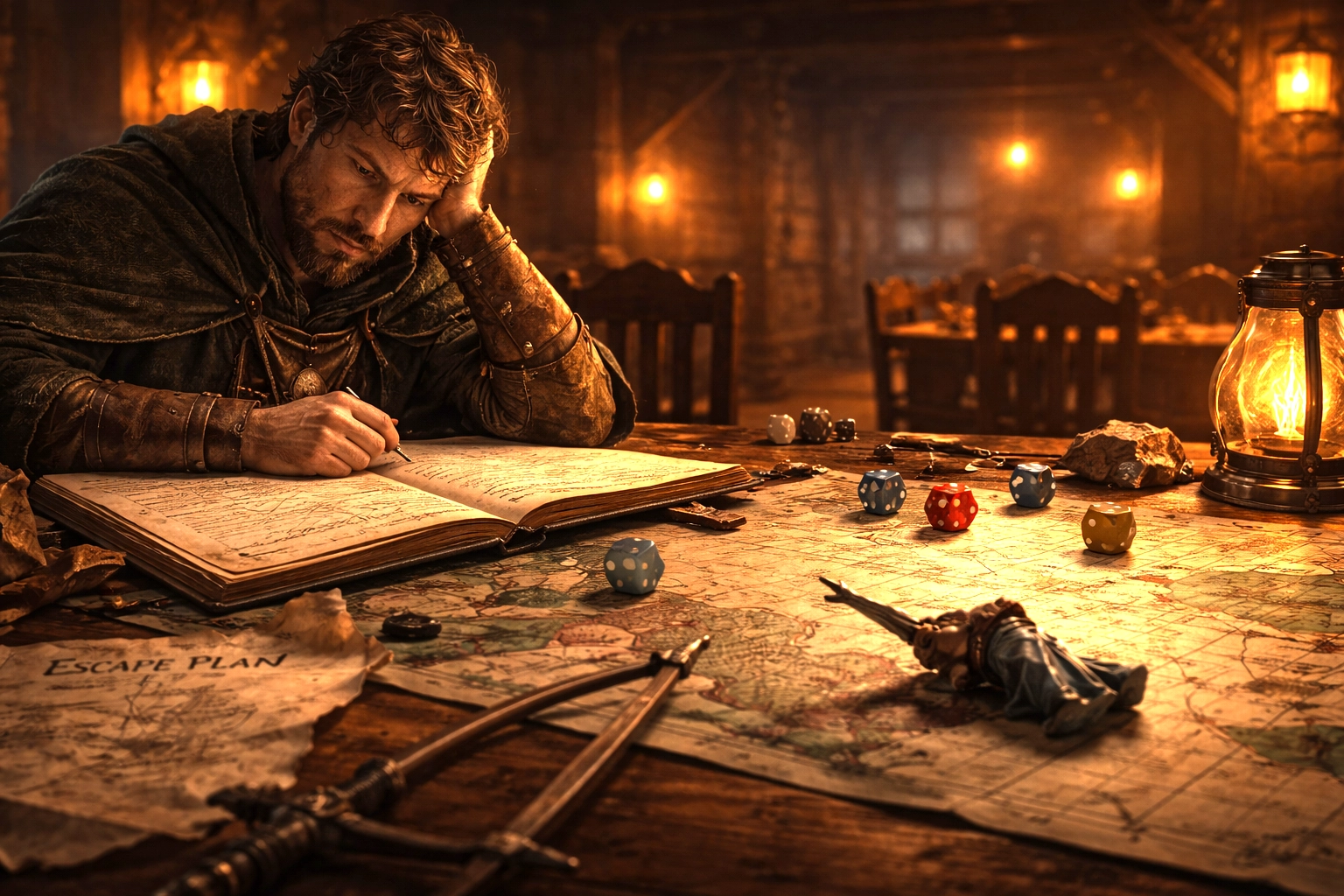
There is a particular kind of panic that only Dungeon Masters know. It begins when the dice do something they absolutely were not supposed to do. and it crescendos when your players cheer.
Session 15 of my Voxels & Valor campaign was the first, and only, time I ever got genuinely angry at my table. They never knew, mind you, but I did. And I learned more in that three-hour stretch than in the ten sessions before it.
Let me tell you about the night I tried to let a villain escape.
I Had a Plan
Iarno Albrek was not supposed to be captured.
He had:
- A hidden passage
- A head start
- Distance
- A horse
- Long-range disadvantage against him
- Every environmental advantage I could reasonably stack
The design was simple: give the party the feeling of a chase without actually allowing success. I wanted Iarno to escape so I could bring him back later. A recurring villain. A lingering thread.
Classic DM move.
I had read about chase mechanics, but I had not practiced running one. That distinction would matter.
The Roll That Ruined My Plan
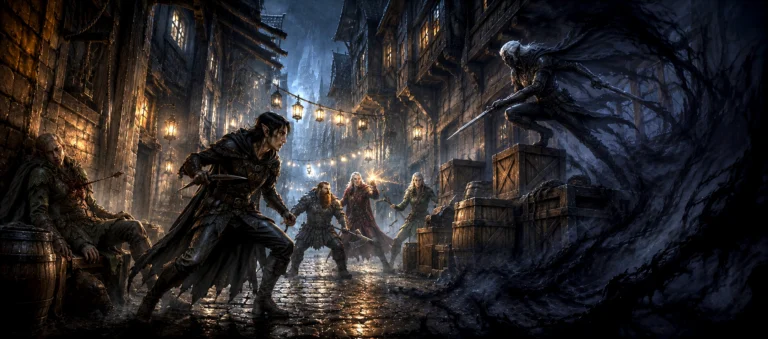
Zend took the shot: longbow, long range, at disadvantage.
I leaned back in my chair, already narrating in my head how the arrow thudded harmlessly into dirt, except, the arrow hit! Against all odds, it hit.
The table erupted, and I felt something sharp and ugly spike in my chest.
Anger.
Not at the players. At the loss of control, at the plan unraveling, at the fact that the story I had imagined was no longer possible.
That reaction surprised me more than the dice did.
“I wasn’t angry because they succeeded. I was angry because I lost control.”
The Truth About That Anger
Here’s what I eventually realized: I wasn’t angry because they succeeded; I was angry because I had mistaken my preferred outcome for the correct one.
There is a subtle but dangerous trap in DM-ing: When we design a moment with a specific resolution in mind, we begin to treat deviation as disruption rather than play.
But the game does not belong to our outlines, it belongs to the table.
“The game does not belong to our outlines. It belongs to the table.”
Zend didn’t break my story; he played his character. Instinctively, decisively, correctly, and the dice rewarded it.
That’s not sabotage; that’s Dungeons & Dragons.
“Zend didn’t break my story. He played his character.”
The Chase I Wasn’t Ready For
After the arrow hit, panic set in. They were gaining on him; they were absolutely going to catch him.
And then it hit me: They’re going to question him.
I had never once considered that possibility. I didn’t know what he would say, didn’t know what they would ask, didn’t know how deep the conspiracy went because I hadn’t needed to yet.
What I had prepared was an escape; I had not prepared consequences.
“I had prepared an escape; I had not prepared consequences.”
That’s a humbling realization mid-session. So, I improvised: corners, rulings, momentum, noise. It wasn’t elegant, but it moved.
And then I did something else.
The Intervention
Linene Graywind stepped out of the Lionshield Coster and knocked Iarno unconscious.
Was it convenient? Yes.
Was it desperate? Also, yes.
Was it necessary? At the time, absolutely.
And here’s the important part: The players didn’t fight it; they accepted it, because in that moment, the town intervening made sense.
It wasn’t railroading; it was world reaction. There’s a difference.
Harbin, Sildar, and Letting Go of Control
I played Harbin Wester as overwhelmed and incompetent, a man out of depth.
Sildar took control. Iarno was arrested, a trial would come later. The party agreed to testify.
The story pivoted, not because I forced it, but because I stopped trying to wrestle it back into my original shape.
What I Learned
That night changed how I prep. Here’s what it taught me:
1. Never Design for Guaranteed Failure
If escape is essential to your campaign, do not leave it to dice. And if you do leave it to dice? Be ready for the dice to win.
2. Prepare Motivations, Not Scripts
I didn’t need to know exactly what Iarno would say.
I needed to know:
- What he wanted.
- What he feared.
- What he would protect.
- What he would trade to survive.
That’s portable prep, and that works whether he escapes or gets captured.
3. Anger Is a Signal
When I felt that flash of anger, it wasn’t because the players did something wrong; it was because I felt my authority slipping. That’s ego talking, and good DMing requires letting go of ego.
The story belongs to everyone.
4. Improvisation Is a Skill You Only Build by Doing
The chase wasn’t perfect, it wasn’t polished, but I survived it. And that’s how you get better. Not by executing flawless plans, but by recovering from broken ones.
“Improvisation isn’t about being ready. It’s about surviving what you didn’t expect.”
And the Drink After
I definitely needed one.
I suspect everyone else did too, because sessions like that are draining. Emotionally, mentally, narratively, but they’re also the ones that make you better.
That night, I learned: you can’t protect your plans, you can only protect the integrity of the world.
Sometimes villains escape; sometimes they get caught. And sometimes you have to let go of the version of the story you thought you were telling.
“Sometimes you have to let go of the version of the story you thought you were telling.”
The dice will decide the rest.