Homebrew • DM Tips • Character Building
Creating a Character: Cleric
The Anchor That Holds the Line
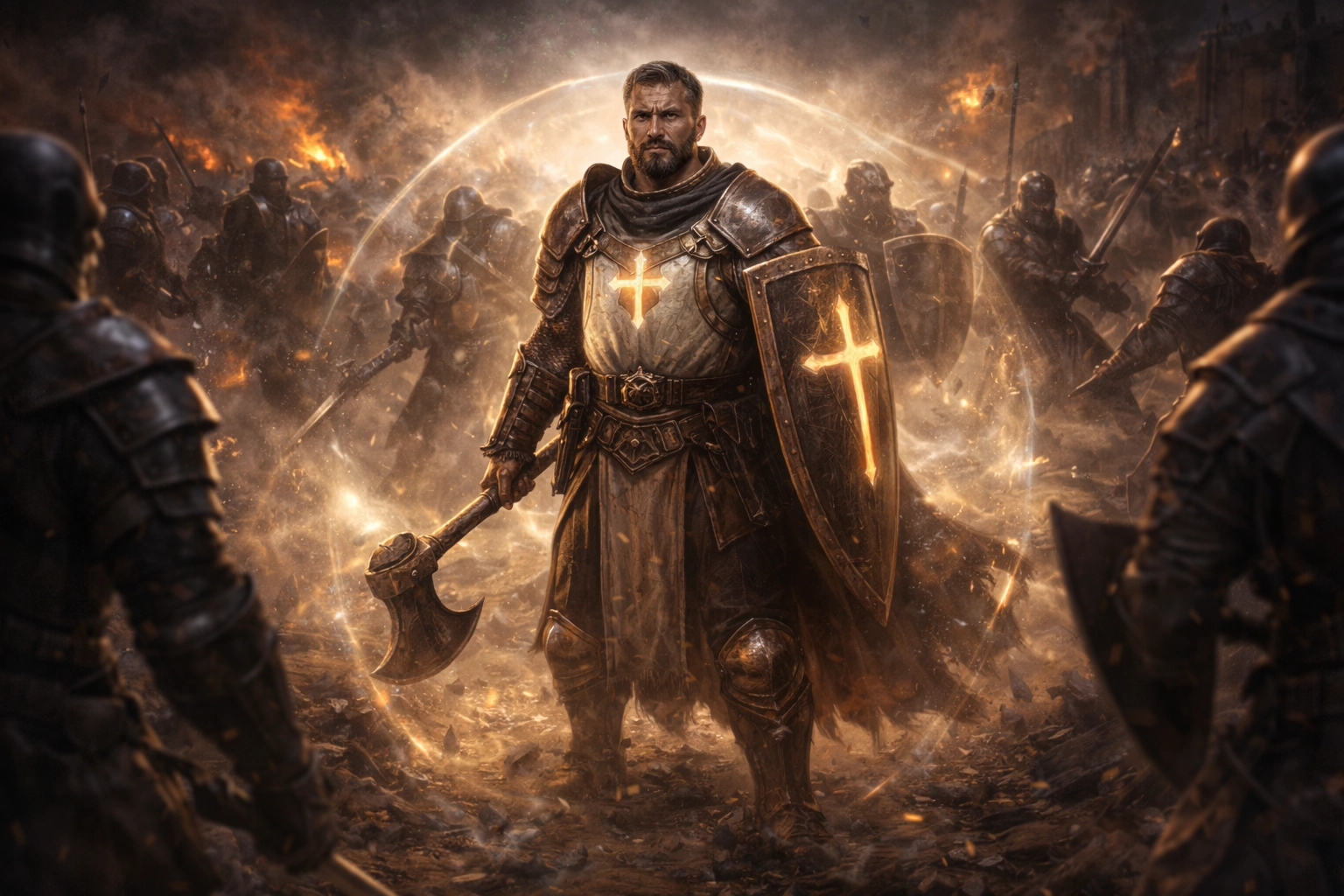
There’s a version of the Cleric that exists mostly on paper. It’s the one that tries to do everything, heal every wound, cast every spell, fix every mistake.
And at the table? It feels slow, reactive, overwhelmed. Turns take too long. Decisions feel muddy. The character drifts between roles without ever fully claiming one.
That Cleric doesn’t scale.
“You are not a generalist. You are the anchor.”
There’s another version. This one steps forward when the fight begins, not to chase damage, but to define the battlefield. They establish pressure early, and they hold it; they force enemies to make bad decisions.
They don’t scramble to save the party; they make it harder for the party to fall in the first place. That Cleric scales.
This is that build.
Building Better Characters
Great characters aren’t built in a single step; they’re shaped over time.
This three-part series explores how to create a character that not only works on paper, but thrives across an entire campaign:
Part 1: Smart Mechanical Choices That Scale
Part 2: Meaningful Character Identity That Drives Play
Part 3: Table Integration and Long-Term Character Success
Start where you are, or follow the full journey.
The Cleric Reframed (2024)
Cleric Design Rule: Pick a Plan
Most Clerics don’t struggle because they’re weak, they struggle because they’re unfocused. This build works because every decision supports a single loop: establish, control, sustain.
Under the 2024 ruleset, Cleric is one of the most stable classes in the game, if you commit to a plan. The class gives you full prepared casting, strong concentration options, reliable bonus action pressure, and durable defenses.
What it does not give you is unlimited action economy. That’s where most Clerics fall apart. They prepare too many options, try to use all of them, and end up doing none of them well.
This build fixes that by narrowing your focus:
You are not a generalist; you are the anchor.
The Build: Frontline Anchor Cleric (Medium Armor, War Domain)
This is a Cleric designed for real campaigns. It works from level 1 and scales cleanly into Tier 2. It doesn’t rely on perfect conditions, and it doesn’t collapse when one spell fails.
You are durable. but not immovable, you are mobile, but not fragile; you choose your ground. And then you hold it.
Ability Scores (Point Buy)
| STR | CON | DEX | WIS | INT | CHA |
|---|---|---|---|---|---|
| 11 | 16 | 14 | 16 | 8 | 11 |
This spread does something important: It invests in what actually matters in play.
It does not invest in peak AC, nor in weapon damage. It does not invest in theoretical versatility; it invests in staying power.
Standard Array Alternative
Using 15, 14, 13, 12, 10, 8:
| STR | CON | DEX | WIS | INT | CHA |
|---|---|---|---|---|---|
| 10 | 14 | 13 | 15 | 8 | 12 |
Clean. Functional. No strain.
Why Medium Armor?
“This build cares more about where you are than one point of AC.”
Because campaigns are not white-room simulations.
Heavy armor gives you a marginal AC increase, but at a real cost. You get disadvantage on Stealth, reduced flexibility in mixed play environments, and harder positioning in non-combat scenes.
Medium armor keeps you mobile, quiet when needed, and positionally flexible. And this build cares more about where you are than one point of AC.
Subclass: War Domain
War Domain Is a Support Engine, not a Fighter Replacement
War Domain doesn’t turn you into a martial class. It gives you something better: meaningful turns when casting isn’t optimal.
If you treat it as your primary identity, the build weakens. If you treat it as a fallback, the build stabilizes.
War Domain gets misunderstood a lot. People assume it turns you into a pseudo-Fighter. It doesn’t; it gives you something far more valuable: The ability to turn “off turns” into meaningful turns.
When casting isn’t optimal, you still contribute, when resources are tight, you still apply pressure. When positioning is awkward, you still matter. War Domain is not your identity, it’s your fallback engine. And that’s exactly what a scaling build needs.
The Core Loop: Establish. Control. Sustain.
“Not a combo. Not a trick. A loop.”
Everything about this character comes down to one repeatable pattern. Not a combo, not a trick. A loop.
Round 1: Establish Pressure
At early levels, that’s Bless. At level 5+, that becomes Spirit Guardians. You are not waiting to see what happens, you are deciding what this fight will feel like. Bless makes your party more consistent. Spirit Guardians makes the battlefield hostile to your enemies.
Then you move. Not recklessly, not timidly. Deliberately.
Your First Turn Sets the Tone
If you delay your concentration spell, you delay your impact.
Round 1 is not for testing the waters, it’s for establishing control.
Round 2+: Control the Space
Now the fight bends around you. Your options open, but your plan stays the same.
- Bonus Action: Spiritual Weapon (when it adds value, not automatically)
- Action:
- Cantrip for safe pressure
- Weapon attack when appropriate
- Dodge when anchoring with Spirit Guardians
“Dodge is not passive. Dodge is commitment.”
That last one matters more than most players think. Dodge is not passive. Dodge is commitment. It says: “I’m staying here. Deal with me.”
Reaction: Stay Standing
Your reaction is not flashy, it’s survival. Because if your concentration drops, your entire plan weakens. Protect your position; protect your spell. Everything else is secondary.
What This Looks Like at the Table
Let’s ground this in actual play.
Scene: Tight Dungeon Corridor (Level 5)
The party opens into a narrow stone hallway. Two enemies rush forward. More shapes move behind them. You step forward, not all the way, just enough.
Round 1: Spirit Guardians goes up. Radiant energy fills the corridor. You don’t chase; you hold the choke point.
Round 2: Enemies push into you and take damage for it. You Dodge, not because you have nothing to do, because this is the best possible use of your turn.
Your party fires past you. The hallway becomes a grinder.
Round 3+: Spiritual Weapon joins the fight.
Now you’re dealing damage, controlling space, and absorbing pressure, all at once. No panic. No scrambling. Just inevitability.
That’s the build.
Why This Works
- You control enemy movement
- You force damage through positioning
- You protect concentration through smart defense
- You enable your party without chasing outcomes
This is the Cleric at full efficiency.
Spell Planning: Choose a Plan, not a List
“You are not preparing spells for ‘what if;’ you are preparing spells for your plan.”
One of the biggest traps in Cleric design is over-preparation. You have access to everything. That doesn’t mean you should prepare everything.
Tier 1 (Levels 1–4)
Your plan is simple: Bless. Maintain. Support.
Key spells:
- Bless
- Healing Word (emergency, not routine)
- Guiding Bolt (situational burst)
You are building consistency, not chasing damage.
Tier 2 (Levels 5–10)
Now the build comes online: Spirit Guardians. Control. Outlast
Support spells exist, but they orbit your core.
- Spiritual Weapon (secondary pressure)
- Revivify (insurance, not identity)
- Utility and situational tools
If you lose Spirit Guardians, you adjust, but you don’t pretend you’re running three concentration plans at once.
Positioning: The Real Skill Ceiling
If You’re Getting Swarmed, You Mispositioned
This build is strongest at the edge of engagement, not the center. If too many enemies can reach you at once, you’ve stepped too far.
This build rewards something many players overlook: Where you stand matters more than what you cast.
You are aiming for edges of engagement, not the center of chaos; choke points, not open exposure; positions that force enemies to enter your space. You are not chasing enemies across the map, you are making them come to you.
Common Cleric Mistakes (And How This Build Avoids Them)
“If you spend every turn reacting, you lose control of the fight.”
1. Trying to Heal Every Turn
You are not a healing machine. If you spend every turn reacting, you lose control of the fight. Healing is for turning points, not maintenance.
2. Bonus Action Overload
You cannot cast Spiritual Weapon, Healing Word, and War Priest all at once. Choose. Plan your turn economy ahead of time.
3. Concentration Confusion
Bless. Spirit Guardians. Shield of Faith. Pick one and build around it. Then, execute.
4. Over-Investing in Weapon Combat
Your weapon is a tool, not your role. If you try to compete with martials at their own game, you will lose. If you use your weapon to fill gaps, you will shine.
5. Standing in the Wrong Place
This is the silent killer. Bad positioning breaks your concentration, hurts your survivability and reduces your impact. Fix your positioning, and the rest of the build improves automatically.
Scaling into Tier 2
What Changes at Level 5
You stop supporting the fight, you start shaping it. Spirit Guardians doesn’t just deal damage, it defines space, tempo, and enemy decisions.
By the time you reach levels 5–10, something shifts. You stop reacting to fights, you start defining them. Enemies take damage just for being near you, struggle to move freely. They are forced into inefficient choices.
As a result, your party lands more hits, takes fewer risks, and fights inside a structure you created.
And you? You’re still doing the same thing you did at level 1. Just better.
Final Thoughts: The Anchor Role
There’s a moment in every good fight where things could go wrong. The line breaks. The enemy pushes through. Someone drops.
This Cleric exists for that moment. Not to fix it after it happens, but to make it harder for it to happen at all. You are not the loudest character at the table; you are not the most explosive. But over the course of a campaign?
You are the one that makes everyone else more effective.
“You are not the loudest character at the table, but you might be the most important.”
You don’t chase the fight, you make the fight come to you; and regret it.
Find Your Role at the Table
Every class in D&D answers a different question:
- Who holds the line? → Fighter
- Who rewrites the rules? → Wizard
- Who applies pressure? → Barbarian
- Who keeps the party standing? → Cleric
- Who hunts and controls the edges of the fight? → Ranger
- Who strikes at the perfect moment? → Rogue
- Who leads from the front with purpose and presence? → Paladin
- Who adapts with nature and flexibility? → Druid
- Who trades risk for power? → Warlock
- Who channels raw magic into explosive potential? → Sorcerer
- Who controls the flow of combat through movement and discipline? → Monk
- Who elevates the entire party? → Bard
This series is built to help you choose more than a class, it helps you choose how you show up at the table.