DM Corner • Homebrew • Creature Feature
When the Dungeon Fought Back
Why the Redbrands Needed Ranks
There’s a moment in every campaign when you realize the stat block on the page is no longer enough.
The battle at the Redbrand Hideout was that moment for my Voxels & Valor campaign.
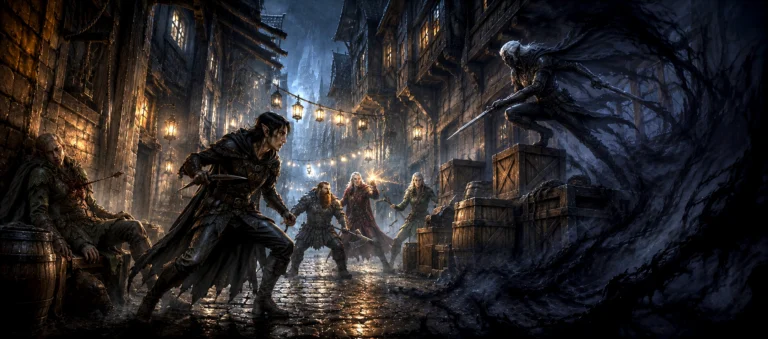
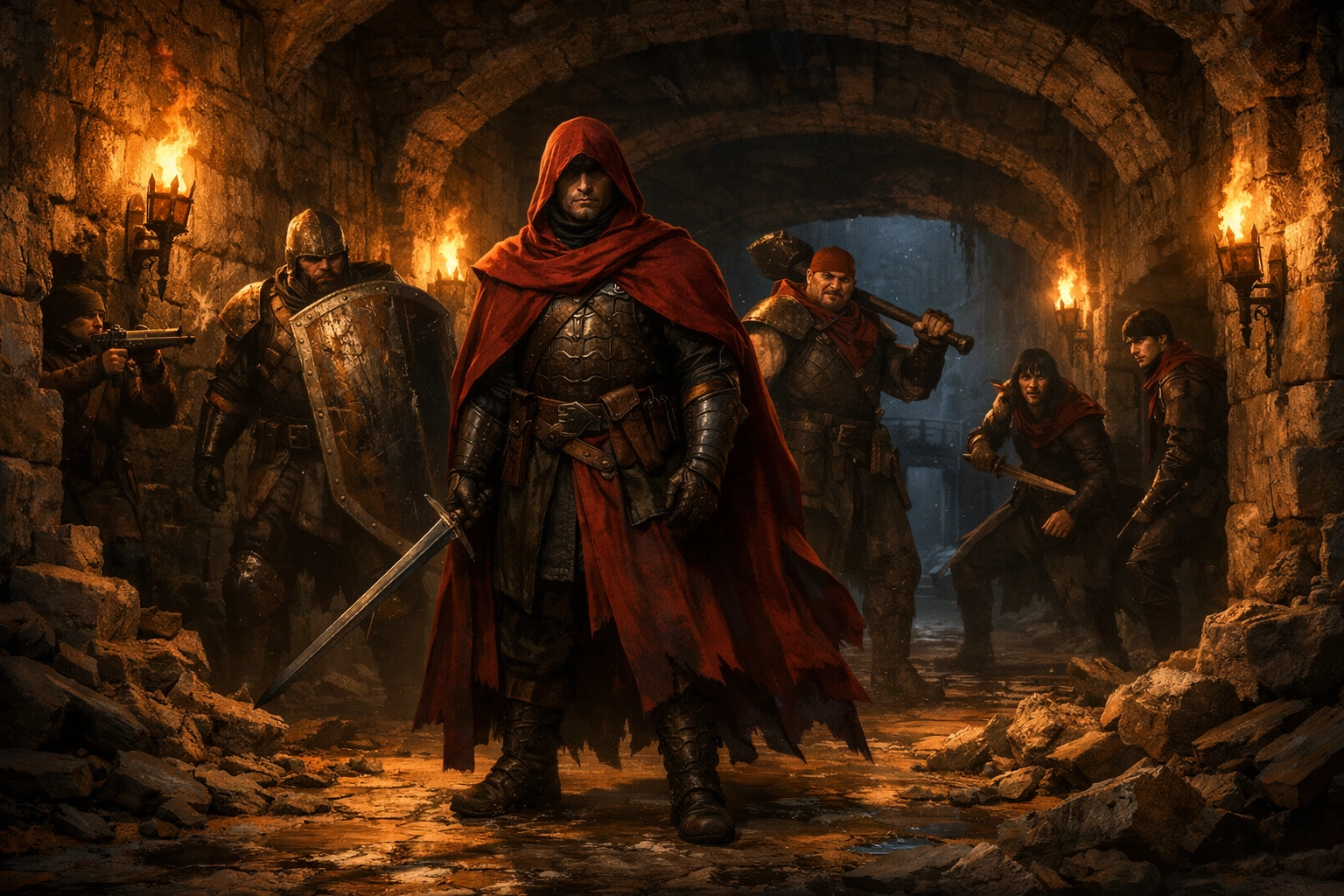
Beneath Tresendar Manor, the Redbrand Hideout stopped behaving like a dungeon. It started behaving like a place full of armed people responding to danger.
They gathered; they advanced; they pressed through choke points in a grim, disciplined procession.
And for five hours, the fight didn’t feel like mowing through bandits. It felt like survival.
By the end of that crevasse battle, after the bridge collapsed, after Akkira chose the fall, after spell slots were gone and bodies were down, the Redbrands had done something unexpected:
They had earned respect. Then the next session happened.
“The Redbrands weren’t strong.
They were organized.”
The last three Redbrands in the barracks tried to hold the line. They tried to run. They failed.
By that point, they weren’t villains anymore, they were loose ends. And loose ends get cut.
That shift, from desperate survival to surgical cleanup, was the hinge.
The Redbrands didn’t just need to exist, they needed to scale.
“If the dungeon can respond,
it stops being scenery.”
Introducing: The Redbrand Ranks
The original Redbrand Ruffian stat block works perfectly at low level, but once a party survives the crevasse? Once they adapt to choke points? Once they start reshaping the battlefield?
Standard Ruffians don’t hold.
So, I built a rank structure. Not more hit points; not bloated damage.
Ranks.
Each one fills a tactical role, punishes a specific mistake, changes how the hideout behaves when the alarm goes up.
The Redbrand Hierarchy
Redbrand Knave
The baseline enforcer. Faster, meaner, less predictable than a common ruffian.
Punishes isolated targets and wounded stragglers.
Check out the Redbrand Knave in the store.
Redbrand Bulwark
Shield wall anchor. Turns hallways into walls of iron and leather.
Punishes parties that try to brute-force choke points.
Check out the Redbrand Bulwark in the store.
Redbrand Breaker
Two-handed brute. Built to shatter frontlines and collapse player formations.
Punishes overconfidence in AC stacking.
Check out the Redbrand Breaker in the store.
Redbrand Bladehand
Duelist and skirmisher. Controls flanks. Hunts casters. Exploits mobility gaps.
Punishes poor positioning.
Check out the Redbrand Bladehand in the store.
Redbrand Marksman
The answer to players who think the backline is safe. Extends threat range. Forces movement under pressure.
Punishes static play.
Check out the Redbrand Marksman in the store.
Redbrand Redcloak
The escalation piece. Command presence. Tactical cohesion. The reason the hideout feels organized instead of chaotic.
Punishes parties who assume the gang lacks leadership.
Check out the Redbrand Redcloak in the store.
Redbrand Ranks Pack
Full faction escalation toolkit. Unifies Knaves, Bulwarks, Breakers, Bladehands, Marksmen, and Redcloak into a cohesive threat that adapts as the party grows.
Punishes complacency.
Check out the Redbrand Ranks Pack in the store.
“This isn’t six stronger bandits.
It’s one faction with structure.”
Why Ranks Instead of Buffs?
Session 13 proved something important: The Redbrands weren’t dangerous because of numbers, they were dangerous because they moved. They funneled through narrow entrances, they applied pressure, they made the battlefield smaller.
The standard Ruffian stat block doesn’t reflect that evolution.
Ranks do.
Instead of inflating hit points, these variants:
- Increase tactical cohesion
- Create layered pressure
- Reward intelligent terrain use
- Encourage coordinated enemy behavior
The hideout becomes reactive. It answers intrusion.
Tactical Identity: What These Ranks Actually Do
This isn’t just “stronger bandits.” Each rank is built around a tactical problem:
| Rank | Tactical Problem Created |
|---|---|
| Knave | No safe retreat |
| Bulwark | No easy push through |
| Breaker | No stable front line |
| Bladehand | No protected flank |
| Marksman | No standing still |
| Redcloak | No disorganized enemy |
“Low-level enemies become dangerous
the moment they start thinking.”
If Session 13 was survival, these ranks explain why. If Session 14 was cleanup, these ranks explain why that shift matters. Because once players outgrow the dungeon…
The dungeon has to grow back.
“Escalation isn’t more hit points.
It’s smarter resistance.”
Designed for Voxels & Valor: Built for Your Table
These stat sheets were born out of Voxels & Valor.
They reflect:
- The five-hour crevasse grind.
- The collapsing bridge.
- The narrow funnel of steel.
- The quiet realization that the party had outgrown Tresendar Manor.
But they’re system-agnostic in concept and fully 5e / 2024 compatible in execution.
You can drop them into:
- Lost Mine of Phandelver
- Urban faction arcs
- Gang-controlled city districts
- Bandit fortresses
- Organized criminal cells
- Early-to-mid tier party escalation
Anywhere a “ruffian” needs to feel like a faction.
The Design Philosophy (Behind the Screen)
From the Creature Feature workflow: Creatures must shape player behavior through positioning, tempo, or encounter pacing.
The Redbrand Ranks are built around exactly that.
Change:
- How players move
- Where players stand
- When players commit
- Who players target first
Reward:
- Flanking awareness
- Resource pacing
- Focus fire discipline
- Battlefield adaptation
Punish:
- Static lines
- Tunnel vision
- Overextension
- Underestimating “low-level” threats
They make the hideout feel alive.
Why This Release Matters
Session 13 showed what happens when enemies respond. Session 14 showed what happens when players evolve.
This release sits between those moments. The Redbrands were never meant to be world-ending villains. But they were meant to matter.
And sometimes the difference between “forgettable bandits” and “five-hour survival grind” is a single design decision: Give them structure, give them roles., give them ranks.