DM Corner • Series • So, You Want to Be a DM
Why Do You Want to DM? – The Dungeon Master’s Chair
So, you want to DM? Discover your reason for wanting to sit in the chair.
Why Do You Want to DM?
The Best Starting Point for New Dungeon Masters
There’s always one chair at the table that no one reaches for.
Dice clatter. Character sheets get shuffled. Someone asks about snacks. Another person flips through a rulebook they don’t quite understand yet. And then, inevitably, there’s a pause. A quiet one. The kind that stretches just long enough for everyone to glance, subtly, toward the same empty seat.
The Dungeon Master’s chair.
From the outside, it looks imposing. Commanding. Like a throne carved from rules, voices, and expectations. It’s the seat of authority. The seat of responsibility. The place where mistakes happen loudly and improvisation is tested in real time.
And if you’re reading this, chances are you’ve felt the pull of that chair.
Maybe you’ve already sat in it once, heart pounding, wondering if you were doing it “right.” Maybe you’ve hovered nearby, hand half-raised, before pulling back. Or maybe you’ve been circling it for weeks, curious, excited, nervous, waiting for permission that never seems to come.
So before we talk about adventures, tools, prep, or checklists, let’s ask the most important question a new Dungeon Master can ask:
Why do you want to DM?
Not the “correct” reason. Not the impressive one. Your reason.
This is where your journey actually begins.
Why Your “Why” Matters More Than the Rules
New Dungeon Masters often assume their biggest hurdle will be learning the rules.
It isn’t.
Rules can be learned. Forgotten. Relearned. Bent. Ignored. Clarified later. Every experienced DM you know has a story about getting a rule wrong and discovering, usually mid-session, that the world did not, in fact, end.
What does end campaigns early is misalignment.
- When your expectations don’t match your motivation.
- When your prep style fights your personality.
- When you say yes to a role you didn’t actually want to play.
Your reason for DMing quietly shapes everything:
- how much prep you tolerate
- what kind of chaos you enjoy
- how you handle mistakes
- whether you see player surprises as problems or gifts
- how long you stick with it when things get messy
So let’s talk about the most common reasons people become Dungeon Masters. You’ll probably recognize yourself in more than one. That’s normal. This isn’t about labels, it’s about understanding your starting point.
The Five Reasons People Become Dungeon Masters
1) “Someone Has to Do It” – The Reluctant DM
This is, quietly, the most common origin story.
You wanted to play. So did everyone else. The group needed a DM. There was an awkward pause. Someone joked about drawing straws. And then, maybe with a sigh, maybe with a shrug, you said the words:
“I can do it.”
Reluctant DMs often underestimate themselves. They didn’t come to the table with a burning vision or a shelf full of notebooks. They came with responsibility, goodwill, and a desire to make sure the game happened at all.
And here’s the secret:
Reluctant DMs are often excellent DMs.
They listen. They care. They pay attention to the group. They don’t run the game to impress themselves. They run it to support others.
2) “I Have a Story to Tell” – The Worldbuilder
You’ve got maps. Or lore. Or a setting that’s been living in your head for years. You daydream about cities, gods, histories, and long-forgotten ruins. You don’t just want to run a game, you want to build a world.
That impulse is powerful. And valuable.
Worldbuilders bring cohesion to their tables. They create places that feel lived in. They care about consistency, atmosphere, and tone.
The common trap here is thinking that story must come before play. New Worldbuilder DMs often delay starting because the world isn’t “ready yet,” or feel crushed when players don’t engage with the parts they worked hardest on.
Your story will grow stronger when it’s shaped by your players, not protected from them.
3) “I Love Running Games” – The Entertainer
Some people light up when the table laughs. When tension breaks. When players lean forward in their chairs. If that’s you, you may already have experience hosting, teaching, coaching, or facilitating games of all kinds.
You thrive on table energy.
Entertainer DMs are adaptable. They read the room. They’re often great improvisers. When players go off the rails, they don’t panic, they grin.
Your biggest strength is momentum. Your biggest risk is exhaustion.
4) “I Want to Share This With People I Love” – The Guide / Parent DM
This reason deserves special attention, because it’s more common (and more meaningful) than people admit.
Parents running games for their kids. Friends introducing friends. Mentors sharing a hobby that shaped them.
These DMs aren’t chasing perfection. They’re chasing connection.
Guide DMs are patient. They explain gently. They care about fairness and fun. They tend to prioritize comfort and encouragement over rules mastery.
You don’t need to be an expert. You’re modeling curiosity, not authority.
5) “It Just Looks Fun” – The Curious Newcomer
Maybe you’ve never played D&D. Or you’ve only played a little. Maybe you’ve watched actual-play shows, listened to podcasts, or seen friends come alive when they talk about their campaigns.
Something about it pulled you in.
Curiosity is not a lesser reason. It’s a good one.
If you’re curious enough to read this far, you’re curious enough to DM.
How Your Reason Shapes Your First Steps
Here’s something many guides won’t tell you:
There is no single “best” starting point for new DMs. There is only the best starting point for your reason.
- Reluctant DMs benefit from clear structure and guidance.
- Worldbuilders benefit from starting small and resisting full homebrew at first.
- Entertainers benefit from adventures with strong NPCs and flexible pacing.
- Guide/Parent DMs benefit from short sessions and simple stakes.
- Curious Newcomers benefit from the most beginner-friendly, supportive materials available.
The Fears Every New DM Has (And Why They’re Normal)
If you’re nervous, congratulations.
It means you care.
New Dungeon Masters share a remarkably consistent set of fears:
- “I don’t know all the rules.” You don’t need to. You need to know where to look and when to decide.
- “What if my players go off the rails?” They will. That’s not failure, it’s play.
- “What if I’m not creative enough?” Players generate more creativity than you ever could alone.
- “What if I mess up?” You will. Often. And the table will keep laughing.
- “What if I freeze?” Structure helps. Experience cures it.
Fear doesn’t mean you’re unqualified. It means you’re stepping into something new.
Finding Your DM Style Before You Ever Roll Dice
You don’t need a label. You don’t need a quiz result. You don’t need to decide what “kind” of DM you are before you start.
But it does help to notice what excites you.
- Do you love surprises or planning?
- Do you prefer story beats or tactical puzzles?
- Do you enjoy rules or narrative flow?
Your style will evolve. It always does. But understanding your preferences now will make your first steps smoother, and more enjoyable.
A Quiet Question to Sit With
When your players leave the table, what do you want them to feel?
Excited? Safe? Curious? Proud? Relaxed?
There’s no wrong answer.
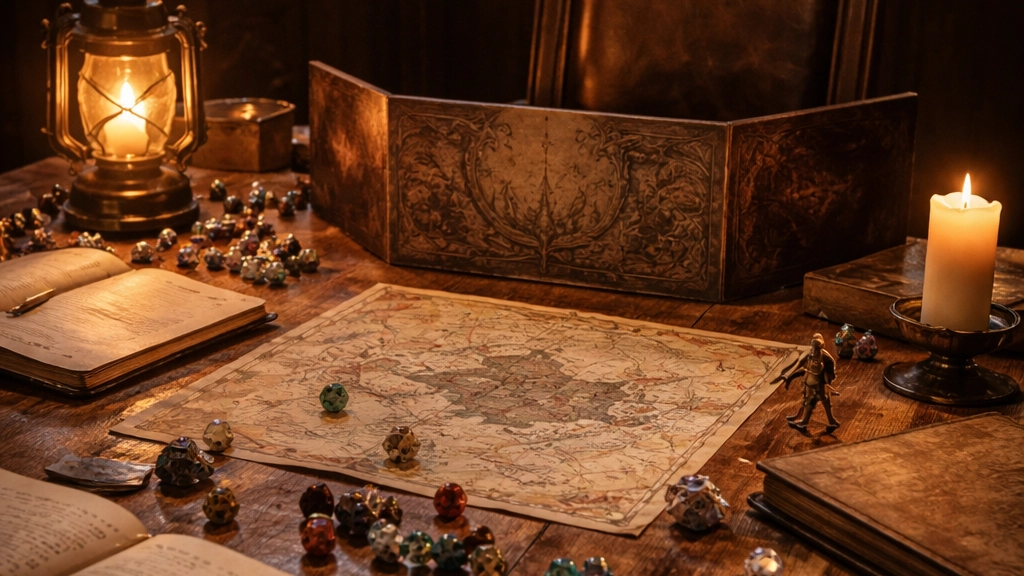
My First Time Behind the Screen
My first time DMing was not elegant.
I had notes. I had plans. I had a vague sense of confidence that evaporated approximately twelve minutes into the session.
Someone asked a rules question I didn’t expect. Someone else tried something definitely not covered in the book. I panicked, made a ruling, immediately regretted it, and then doubled down because it was too late to retreat with dignity.
DMing doesn’t reward perfection. It rewards presence.
Choosing the Chair
That empty chair at the table isn’t a throne. It isn’t a test. It isn’t reserved for experts.
It’s a seat offered to anyone willing to care about the experience of others.
Your reason for wanting to DM doesn’t have to be noble. Or impressive. Or permanent.
It just has to be yours.
Next in the Series: Choosing Your First Adventure. Not the “best” one, but the one that supports the reason you stepped behind the screen.
Until then, take your time.
The chair isn’t going anywhere.