Homebrew • Encounter Prep
Encounter Pacing – Fight, Flee, or Foreshadow
How to keep tension alive — and make every encounter feel like part of a living world.
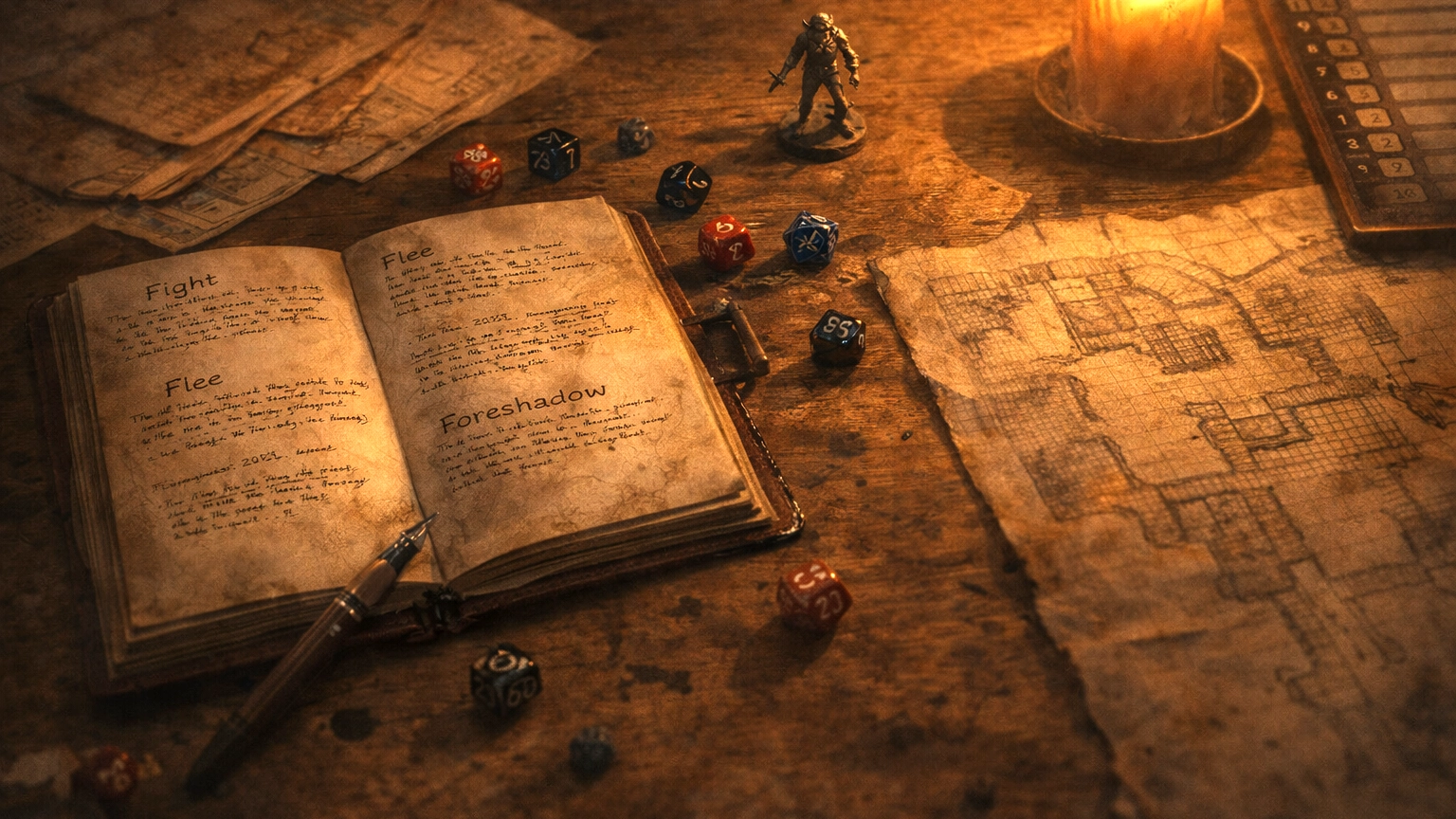
The Rhythm of Danger
Every table has its own tempo.
Sometimes it’s the heartbeat of steel clashing on stone. Other times, it’s the hush before something goes wrong.
As Dungeon Masters, we’re not just planning encounters — we’re conducting them.
If every scene ends in blood, combat turns into background noise. If every threat evaporates, danger loses its bite.
But when you deliberately alternate between fight, flee, and foreshadow, you create a rhythm your players don’t just understand — they feel.
The Fight: Earned Chaos
Combat is the crescendo. And like any good crescendo, it needs a buildup.
Instead of dropping fights out of nowhere, give your players a reason to want the confrontation.
Trim the fat. Three to five rounds of focused intensity beat twelve rounds of slog every time. (Boss fights earn exceptions — random brawls don’t.)
Let their choices lead to violence. (“You could let him go… or chase him into the fog.”)
Keep the stakes visible. What changes if they lose? What breaks if they win?
The Flee: Controlled Retreat
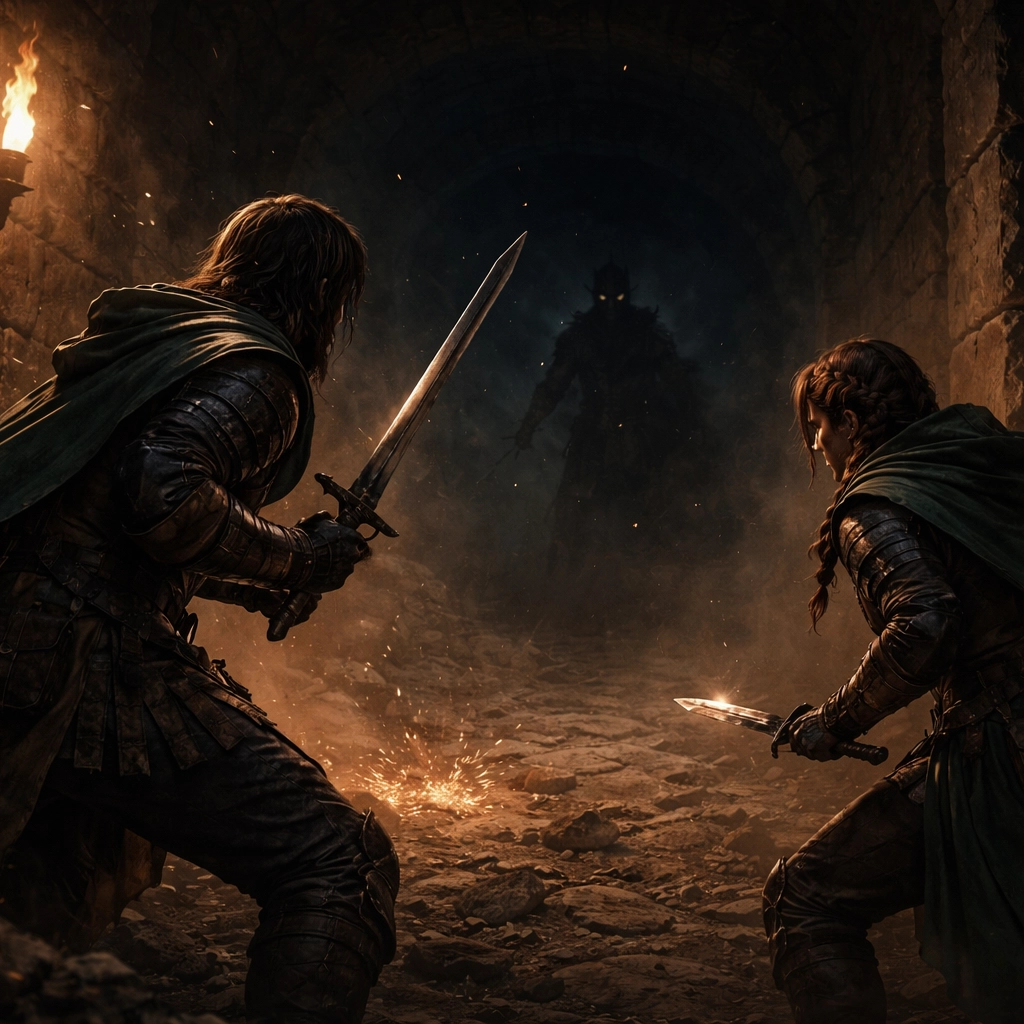
Sometimes the smartest victory is survival.
Giving players permission to retreat makes your world feel alive — and dangerous.
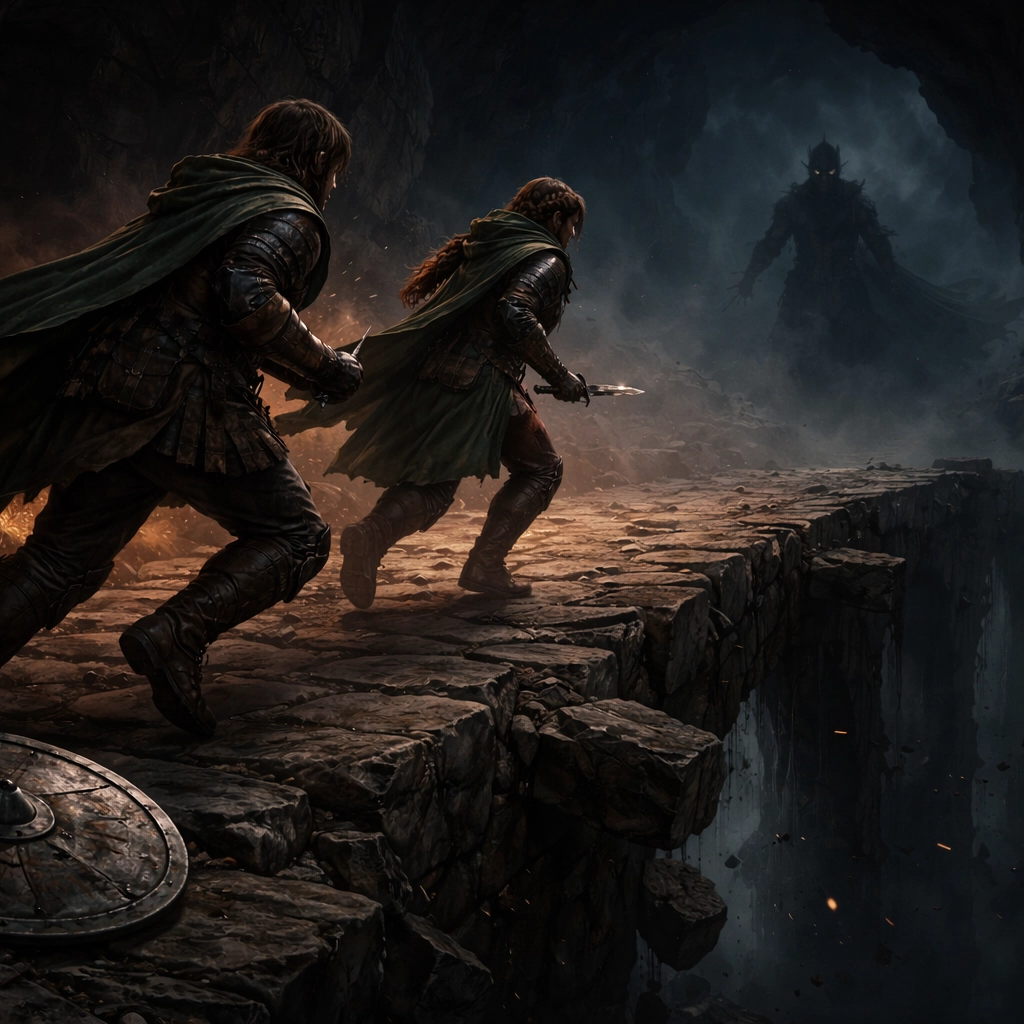
Encourage flight with clear signals:
- Overwhelming odds. (A CR 8 creature growling in a level 3 dungeon.)
- Hostile environments. Collapsing bridges. Flooding tunnels. Burning rooftops.
- Time pressure. “The ritual completes in two rounds. What matters most?”
The Foreshadow: Suspense That Breathes
A glimpse of claws beneath the floorboards. A scream echoing from somewhere unseen. A single footprint where no one should have walked.
Foreshadowing turns curiosity into tension — and tension into investment.
When players know something is coming, they lean forward.
- Seed sensory clues. Sounds, smells, tracks, half-seen shapes.
- Use recurring motifs. A symbol. A name. A tune no one remembers learning.
- Pay it off later. “Wait… that’s the same mark we saw at the farm.”
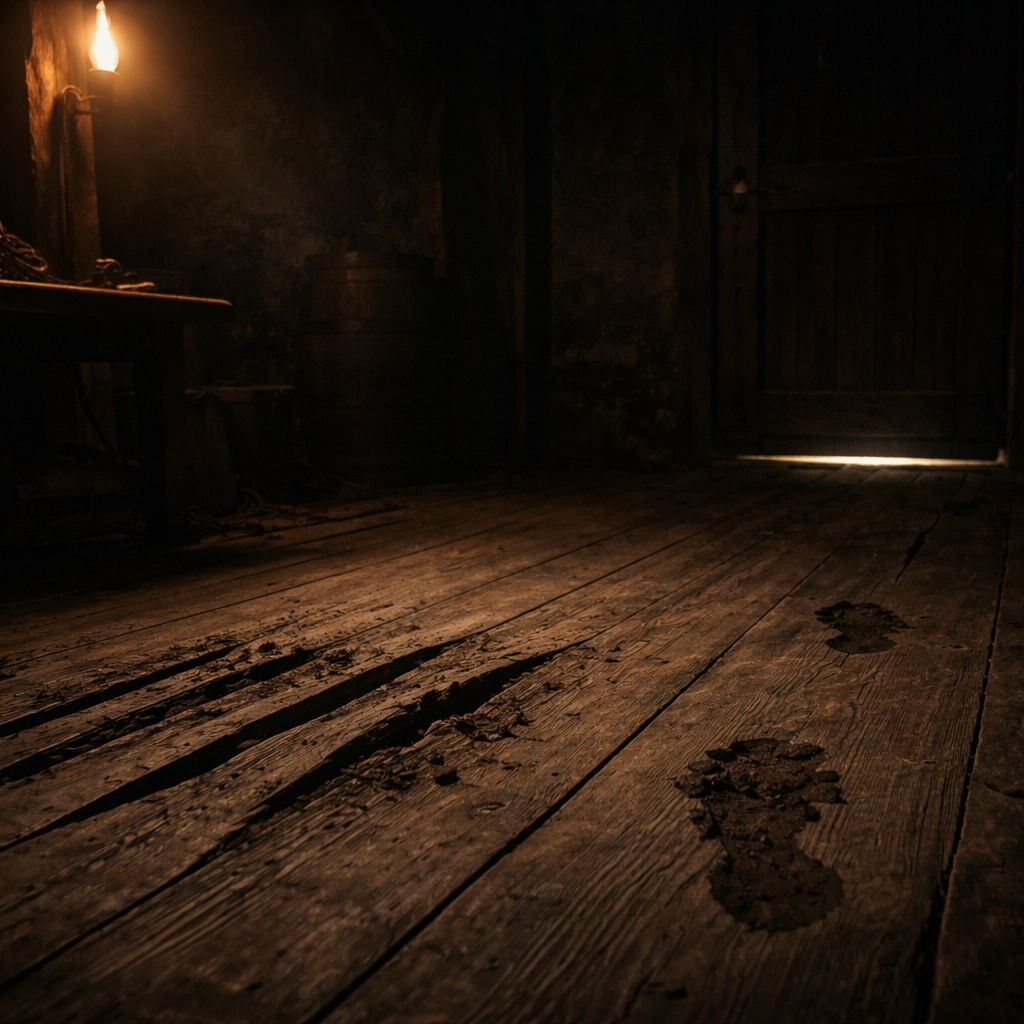
Restraint is the trick. You’re planting seeds — not dropping anvils
The Pulse Between Encounters
True pacing isn’t about how often encounters happen. It’s about contrast.
A quiet road makes the ambush sharper. A desperate escape makes the next victory sweeter.
Think of your campaign like music. Silence is part of the score.
“The best encounters don’t just test your players’ stats — they test their instincts.”
The Final Beat
When you master the rhythm — when you know when to fight, when to flee, and when to foreshadow — your world starts to breathe.
Not every battle needs blood. Not every escape needs triumph.
But every encounter should matter.