
DM Corner • Creator Spotlight• Awesome Dice
Creator Spotlight: Disquietus – A First Campaign Review
There are a lot of Dungeons & Dragons campaigns I read. Far fewer stay with me once I close the book. Disquietus was one of those rare exceptions.
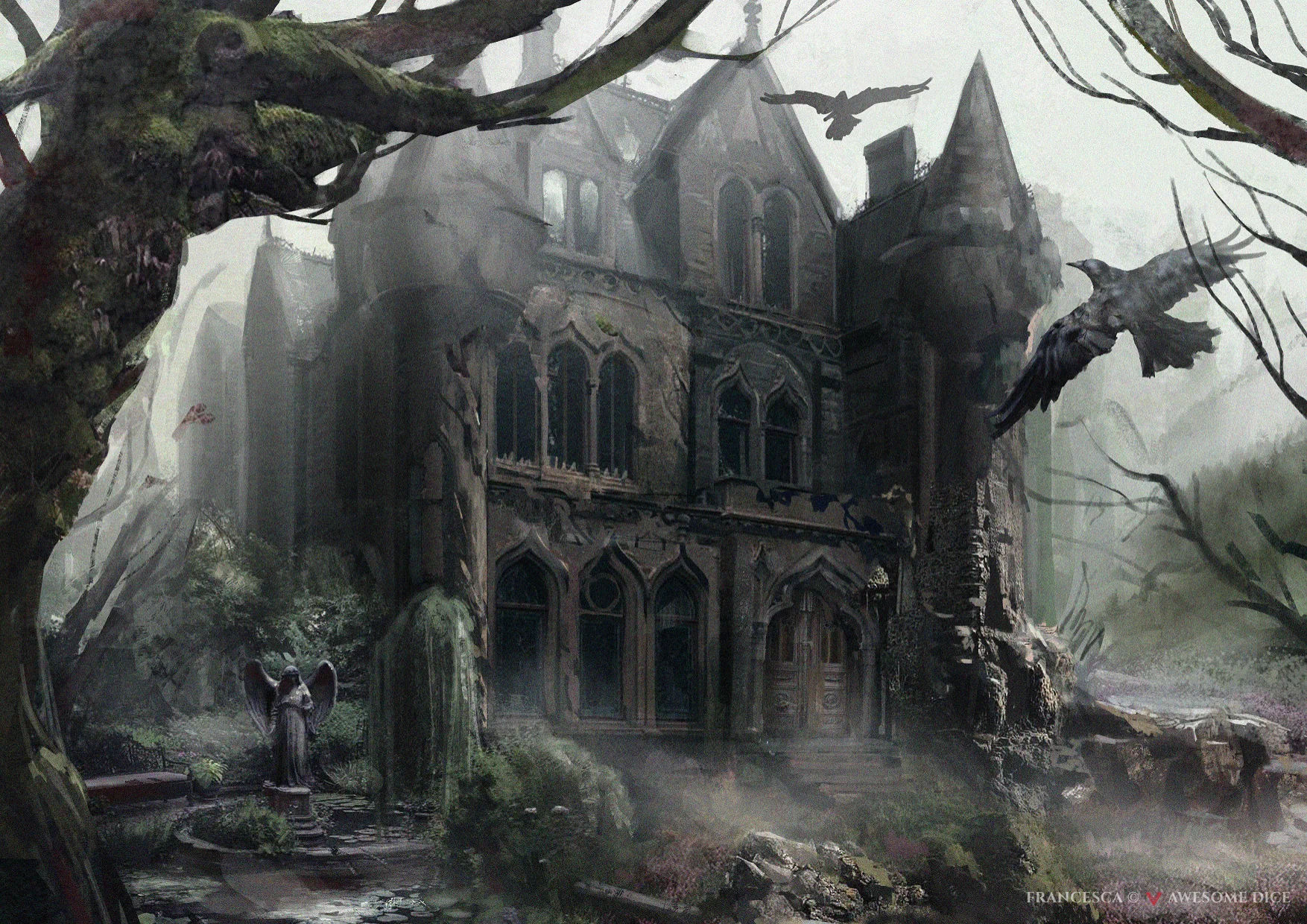
Part of that comes down to timing. In my own long-running Dragon Heist campaign, I opened with a modified run through Durst Manor from Death House and made a deliberate choice not to let the horror end there. Instead of treating it as a prologue, I carried those themes forward, allowing unease, consequence, and moral discomfort to linger beneath what is otherwise an urban, intrigue-driven story.
So, when I sat down with Disquietus, I immediately recognized a familiar approach. This wasn’t horror as spectacle. It wasn’t gore, shock, or cruelty. It was something quieter and more patient: a story rooted in denial, stagnation, and the slow exhaustion of a land forced to carry a lie far longer than it ever should have.
Series Note:
This article is Part 1 of a two-part series. It’s based on a full read-through of the campaign and direct conversation with its creator. Here, I’m focusing on intent, tone, and structure. Part 2 will explore how Disquietus translates to live play once dice start rolling.
A First Campaign, not a First Story
Disquietus is the first full-length tabletop roleplaying campaign written by Jaimie, but it is very clearly not the work of a first-time storyteller.
Jaimie comes from a background in fiction, and that foundation shows. The campaign has a strong narrative spine, a consistent emotional throughline, and an unusual amount of restraint, qualities that are surprisingly rare in long-form TTRPG adventures.
The original spark for Disquietus came from an unexpected place: a YouTube video by Pointy Hat (Antonio Demico) exploring the idea of “vampires of sin.” Where the video ended with a speculative “wouldn’t it be fun if…?”, Jaimie responded with a “yes, and…” and then spent nearly a year-and-a-half turning that idea into a complete campaign narrative.
“Wouldn’t it be fun if…?” met “Yes, and…” and then turned into a full campaign over the course of a year-and-a-half.
That gestation period matters. Disquietus doesn’t feel rushed or padded. It feels considered.
About the Author
Jaimie is a fiction writer and tabletop roleplaying game designer. Disquietus is her first full-length Dungeons & Dragons campaign, marking her transition from long-form narrative fiction into interactive storytelling.
With a strong emphasis on tone, atmosphere, and emotional consequence, Jaimie approaches TTRPG design as a narrative craft, treating mechanics not as spectacle, but as tools in service of story. Her work favors mystery, restraint, and moral ambiguity over shock or excess.
From Novel to Table: Design Through Constraint
One of the most interesting aspects of Disquietus is how openly its creator acknowledges the challenges of translating fiction into play.
Jaimie has been candid that combat was the hardest part of the process, and that honesty manifests in an unexpected way. Rather than over-engineering flashy encounters, the campaign leans into pressure, numbers, and attrition. Combat exists to reinforce tone, not dominate it.
Designer Note (Combat Balance):
Jaimie described a counterintuitive approach to encounter balance: she started writing fights that felt like guaranteed TPKs, then scaled them back. In practice, those “too hard on paper” fights landed closer to balanced play than encounters that initially seemed easy.
That philosophy helps explain why Disquietus consistently feels tense without tipping into brutality. The danger is real, but it is rarely sadistic.
Tone here is treated as a genuine design constraint. Jaimie shared that any idea she debated internally for too long was ultimately scrapped, not because it lacked merit, but because it didn’t belong. A gladiatorial-style final encounter was one such idea: exciting on paper but ultimately abandoned because it clashed too sharply with the campaign’s established mood.
Tone isn’t decoration in Disquietus; it’s the constraint that shapes every major decision.
The result is a campaign that knows exactly what it is, and just as importantly, what it isn’t.
What Kind of Campaign Is Disquietus?
This is the section most Dungeon Masters care about when deciding whether to run a campaign, so clarity matters.
Structure
Disquietus is a linear campaign by design. It moves from A to B to C to D. There is flexibility in how players approach problems, but not in where the story ultimately leads.
DM Advisory:
If your table thrives on open-map sandbox play, Disquietus may feel restrictive. If your players enjoy a strong narrative throughline, where the fun is in how they approach the problem, not where the story goes, this campaign will feel supportive rather than railroaded.
That structure is neither accidental nor apologetic. It’s the backbone that allows the mystery and emotional weight to land.
Tone & Genre
Despite its undead, vampires, and haunted locations, Disquietus is not a horror campaign in the splatter-film sense. It’s haunted, somber, melancholic, and atmospheric.
Tone Check:
This campaign has teeth, but it isn’t brutal. It can be pushed darker by a DM who wants to, but it doesn’t require escalation into gore or terror to work.
Pillars of Play
This is a campaign that favors roleplay, investigation, and exploration. Combat is present and meaningful, but it is neither constant nor the central attraction.
Leveling, Difficulty, and Narrative Scale
Disquietus begins at level 6, and that choice is intentional.
Low-level fragility makes it difficult to apply sustained pressure without risking accidental total party kills, particularly in a campaign where enemies are meant to feel relentless rather than explosive. Starting at level 6 gives characters enough durability to endure tension while still leaving meaningful room for growth.
Progression is handled through capstone-style leveling, with advancement tied to thematically appropriate moments rather than a strict XP treadmill. This serves two purposes:
- It reinforces tone by tying growth to story rather than body count.
- It creates a strong sense of personal scale.
By the time the party returns, the world hasn’t changed, but they have.
Early threats feel dire. Later, familiar dangers are overcome with confidence. That contrast is one of the campaign’s quiet strengths.
A Note on Melchior (No Spoilers)
Without giving anything away, it’s worth noting that Disquietus includes at least one central NPC who is not meant to be solved, defeated, or morally categorized.
When asked what she hoped players would feel about Melchior by the end of the campaign, Jaimie described a complex mix of empathy, tragedy, sadness, and acceptance, and emphasized that there is no correct reaction.
Looking Ahead
Melchior is one of the elements I’ll be watching most closely in Part 2. Some NPCs “land” the way the author intends. Others become mirrors for the table. Either way, the reaction will be the story.
Who Should (and Shouldn’t) Run Disquietus
This campaign is a strong fit for:
- RP-forward tables
- Groups that enjoy mystery and slow-burn tension
- Players comfortable with moral ambiguity
- DMs who value pacing, tone, and consequence
It may not be a good fit for:
- Sandbox-first groups
- Players who resist linear narratives
- Tables seeking constant tactical escalation
Being clear about this isn’t a criticism, it’s respect for both the material and the audience.
Closing Thoughts
Disquietus knows exactly what it wants to be.
It’s a thoughtful, atmospheric campaign that prioritizes tone, narrative cohesion, and emotional payoff over spectacle. As a debut tabletop campaign from a novelist, it demonstrates an impressive willingness to learn the medium rather than force prose solutions onto game problems.
In Part 2, I’ll be taking Disquietus to the table and exploring how intent translates into play: player reactions, pacing surprises, encounter scaling, and, yes, how Melchior lands with a real group of adventurers.
For now, this is a campaign worth paying attention to.
I wanted to submit a comment on my own post, just to see what it felt like to have one of my posts commented on.
Thank you for this incredibly thoughtful review, and for all the time and attention you’ve given to my little publication. This is a wonderful summation that probably describes Disquietus better than I ever could! Seeing someone find enjoyment in something that required so much love and effort to write is the single greatest achievement any author, no matter their specialty, can achieve. I look forward to future conversations and collaborative posts with you. Cheers to you and yours. – Jaimie
Thanks, Jaimie! I enjoyed collaborating with you too, and look forward to continued work together in the future. Warm regards, Scott