
Homebrew • DM Tips • Character Building
Creating a Character: Warlock
How to build a character that belongs at the table, and thrives across a long campaign
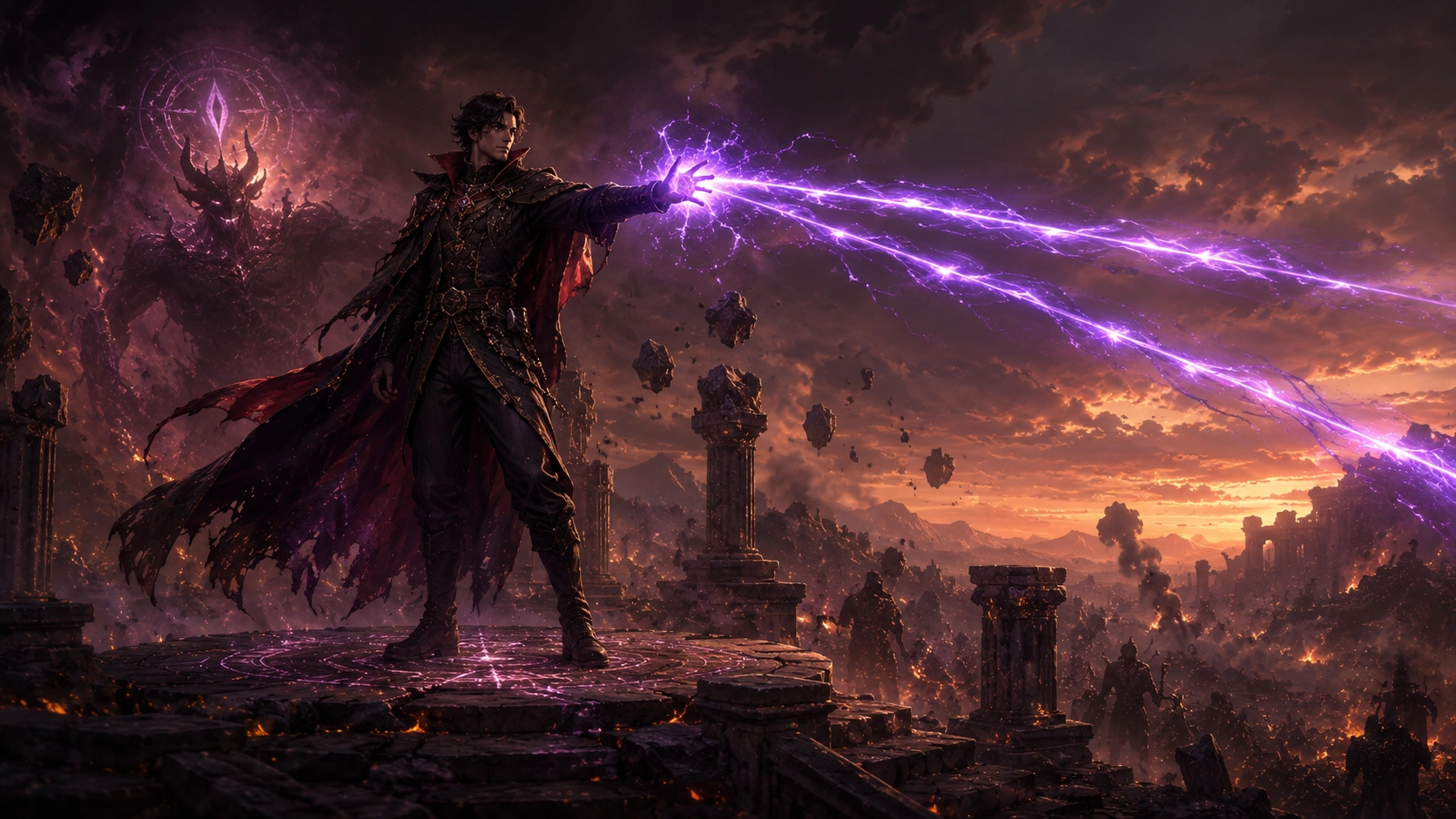
Building Better Characters
Great characters aren’t built in a single step; they’re shaped over time.
This three-part series explores how to create a character that not only works on paper, but thrives across an entire campaign:
Part 1: Smart Mechanical Choices That Scale
Part 2: Meaningful Character Identity That Drives Play
Part 3: Table Integration and Long-Term Character Success
Start where you are, or follow the full journey.
Warlocks are one of the most misunderstood classes in Dungeons & Dragons. At first glance, their limited spell slots can make them seem weaker than other full spellcasters. In practice, a well-built Warlock trades quantity for consistency, pairing reliable cantrip damage with carefully chosen spells that can reshape an encounter.
The 2024 Player’s Handbook reinforces this identity. Eldritch Blast remains the class’s defining feature, while Invocations and Pact Boons provide enough customization to make every Warlock feel unique without sacrificing effectiveness.
For this series, however, we’re less interested in maximizing damage through elaborate multiclass combinations or one-round nova turns. Instead, we’re building a Warlock that performs reliably across an entire campaign, contributes in every encounter, and scales naturally from first level through the end of Tier 2.
This build focuses on battlefield control, dependable ranged damage, and smart resource management—giving you a character who is always contributing, even after the spell slots are gone.
Build Philosophy
Every article in this series follows the same principles:
- Strong from Level 1 onward.
- Minimal reliance on niche magic items.
- Effective across many different campaign styles.
- Straightforward progression with few mechanical traps.
- Balanced offense, defense, and utility.
The Warlock excels at doing a few things exceptionally well rather than trying to do everything. This build embraces that philosophy by investing in consistency instead of flashy bursts of power.
The Build at a Glance
Class: Warlock
Primary Ability: Charisma
Secondary Ability: Constitution
Suggested Background (Point Buy): Any background that improves Charisma while supporting social skills such as Persuasion, Insight, Deception, or Arcana.
Subclass: Fiend Patron
Primary Combat Role: Ranged Controller / Sustained Striker
Core Strengths
- Reliable ranged damage every round
- Excellent battlefield positioning tools
- Strong social presence
- High-impact spellcasting despite limited spell slots
- Flexible utility through Eldritch Invocations
Ability Scores
Point Buy (Primary Recommendation)
| STR | DEX | CON | INT | WIS | CHA |
|---|---|---|---|---|---|
| 8 | 14 | 14 | 10 | 10 | 15 |
This distribution prioritizes your spellcasting while providing enough Constitution to protect your concentration and enough Dexterity to improve Armor Class and initiative.
Standard Array
| STR | CON | DEX | WIS | INT | CHA |
|---|---|---|---|---|---|
| 8 | 13 | 14 | 10 | 12 | 15 |
The Standard Array version trades a point of Dexterity for improved Wisdom without significantly affecting the build’s overall performance.
Why the Fiend Patron?
Several Warlock subclasses perform well under the 2024 rules, but the Fiend offers one of the smoothest experiences from Levels 1–10.
Its defining feature grants temporary hit points whenever you defeat an enemy, providing a steady source of survivability without requiring additional actions or resources. Those extra hit points accumulate naturally over the course of an adventuring day, making the Warlock noticeably more durable than many players expect.
The Fiend’s expanded spell options also complement a ranged control playstyle, giving you answers to different encounter types without complicating your core strategy.
Most importantly, none of its major features compete for your action economy. You simply keep doing what your Warlock already wants to do.
Core Combat Loop
The strength of this build lies in its simplicity.
Opening Round
Identify whether the encounter calls for a concentration spell.
Against weaker groups, Hex can steadily increase your damage over multiple rounds.
Against dangerous enemies or crowded battlefields, prioritize a control spell that limits enemy movement or actions instead.
Mid-Fight
Once concentration is established:
- Cast Eldritch Blast every round.
- Use your Invocations to reposition enemies.
- Focus fire to remove threats efficiently.
- Preserve spell slots unless the encounter truly demands another cast.
Because Eldritch Blast scales automatically as your character levels, your baseline damage remains competitive without consuming resources.
End of Combat
The Fiend’s temporary hit points often leave you entering the next encounter healthier than expected.
Your spell slots recover on a short rest, allowing you to remain impactful throughout the adventuring day when opportunities for recovery arise.
Recommended Pact Boon
For this build, Pact of the Tome offers the strongest balance of combat and utility.
Additional cantrips expand your problem-solving options without affecting your primary combat routine, while the Tome reinforces the Warlock’s role as an adaptable magical specialist.
If your campaign emphasizes exploration, investigation, or social encounters, Pact of the Tome continues providing value long after combat ends.
Eldritch Invocation Priorities
Your Invocations define how your Warlock expresses its power.
Prioritize options that improve consistency rather than situational bursts.
Essential
- Agonizing Blast – Adds your Charisma modifier to Eldritch Blast, making it one of the most reliable damage options in the game.
Strong Early Picks
- Repelling Blast for battlefield control.
- Utility-focused Invocations that support exploration or social encounters.
Rather than stacking every available Eldritch Blast enhancement, diversify your choices. A Warlock with useful exploration abilities often contributes more to an entire campaign than one focused exclusively on damage.
Feat Priorities
The first priority is maximizing Charisma.
Once Charisma reaches 20, consider feats that improve survivability or battlefield awareness rather than chasing small damage increases.
Strong options include:
- Ability Score Improvement (Charisma)
- Alert
- War Caster (if available in your campaign)
- Resilient (Constitution)
These choices strengthen your core strategy rather than replacing it.
Spell Selection Philosophy
Warlocks know relatively few spells, making every selection important.
Rather than filling your list with niche options, choose spells that remain useful across many encounters.
Prioritize:
- Reliable concentration effects
- Area control
- Defensive reactions
- Social utility
- Exploration tools
Since your spell slots are limited, every spell should solve meaningful problems rather than simply dealing damage.
Scaling Through Tier 2
Levels 1–4
Your gameplay revolves around careful spell slot management and establishing Eldritch Blast as your primary offensive tool.
Choose encounters wisely and avoid spending resources unnecessarily.
Levels 5–7
This is where the build truly comes online.
Additional Eldritch Blast beams significantly improve your sustained damage, while stronger spells and additional Invocations expand your tactical options.
You begin influencing enemy positioning almost every round.
Levels 8–10
By this point, Charisma should be approaching its maximum.
Your Eldritch Blast has become one of the most dependable offensive abilities available, while your spell list offers solutions for a wide variety of challenges.
Rather than relying on explosive turns, you consistently pressure enemies from the opening round until combat ends.
Common Mechanical Traps
Casting Hex Every Fight
Hex is excellent—but not mandatory.
Many encounters benefit more from a powerful control spell than a modest damage increase.
Always ask whether controlling the battlefield will accomplish more than adding extra damage dice.
Spending Spell Slots Too Early
Warlocks recover quickly after short rests, but those rests are never guaranteed.
Avoid opening every encounter with your strongest spells simply because you have them available.
Resource discipline is part of mastering the class.
Ignoring Constitution
Your concentration spells define much of your battlefield presence.
Losing concentration repeatedly dramatically reduces your effectiveness.
Constitution is not an optional defensive stat—it supports your entire combat strategy.
Building Only Around Eldritch Blast
Eldritch Blast is your primary weapon, but it shouldn’t become your only contribution.
Invocations, utility magic, social skills, and clever spell selection are what transform a Warlock from a ranged damage dealer into one of the most versatile characters in the party.
Playing the Campaign-Ready Warlock
This build rewards patience more than aggression.
Rather than chasing spectacular turns, you establish control early, pressure enemies every round, and solve problems with carefully chosen magic instead of overwhelming spell volume.
You won’t cast as many spells as a Wizard.
You won’t unleash the explosive nova rounds of a Sorcerer.
Instead, you’ll contribute meaningfully in nearly every encounter, conserve resources naturally, and remain valuable whether the party faces one difficult battle or a full adventuring day’s worth of challenges.
For a campaign expected to spend most of its time between Levels 1 and 10, that’s exactly the kind of reliability this series aims to showcase.
Final Thoughts
The Warlock demonstrates that power in D&D isn’t measured by the number of spell slots on your character sheet. It’s measured by how consistently you can influence the game.
By combining the Fiend Patron with disciplined spell selection, Eldritch Blast, and carefully chosen Invocations, this build delivers dependable damage, meaningful battlefield control, and excellent utility without becoming overly complicated.
If you’re looking for a character who always has something useful to do—whether in combat, exploration, or roleplaying—the Campaign-Ready Warlock is an outstanding choice for any long-running campaign.
Find Your Role at the Table
Every class in D&D answers a different question:
- Who holds the line? → Fighter
- Who rewrites the rules? → Wizard
- Who applies pressure? → Barbarian
- Who keeps the party standing? → Cleric
- Who hunts and controls the edges of the fight? → Ranger
- Who strikes at the perfect moment? → Rogue
- Who leads from the front with purpose and presence? → Paladin
- Who adapts with nature and flexibility? → Druid
- Who trades risk for power? → Warlock
- Who channels raw magic into explosive potential? → Sorcerer
- Who controls the flow of combat through movement and discipline? → Monk
- Who elevates the entire party? → Bard
This series is built to help you choose more than a class—
It helps you choose how you show up at the table.