Homebrew • DM Tips • Character Building
Creating a Character, Part III: Table Integration & Longevity
How to build a character that belongs at the table, and thrives across a long campaign
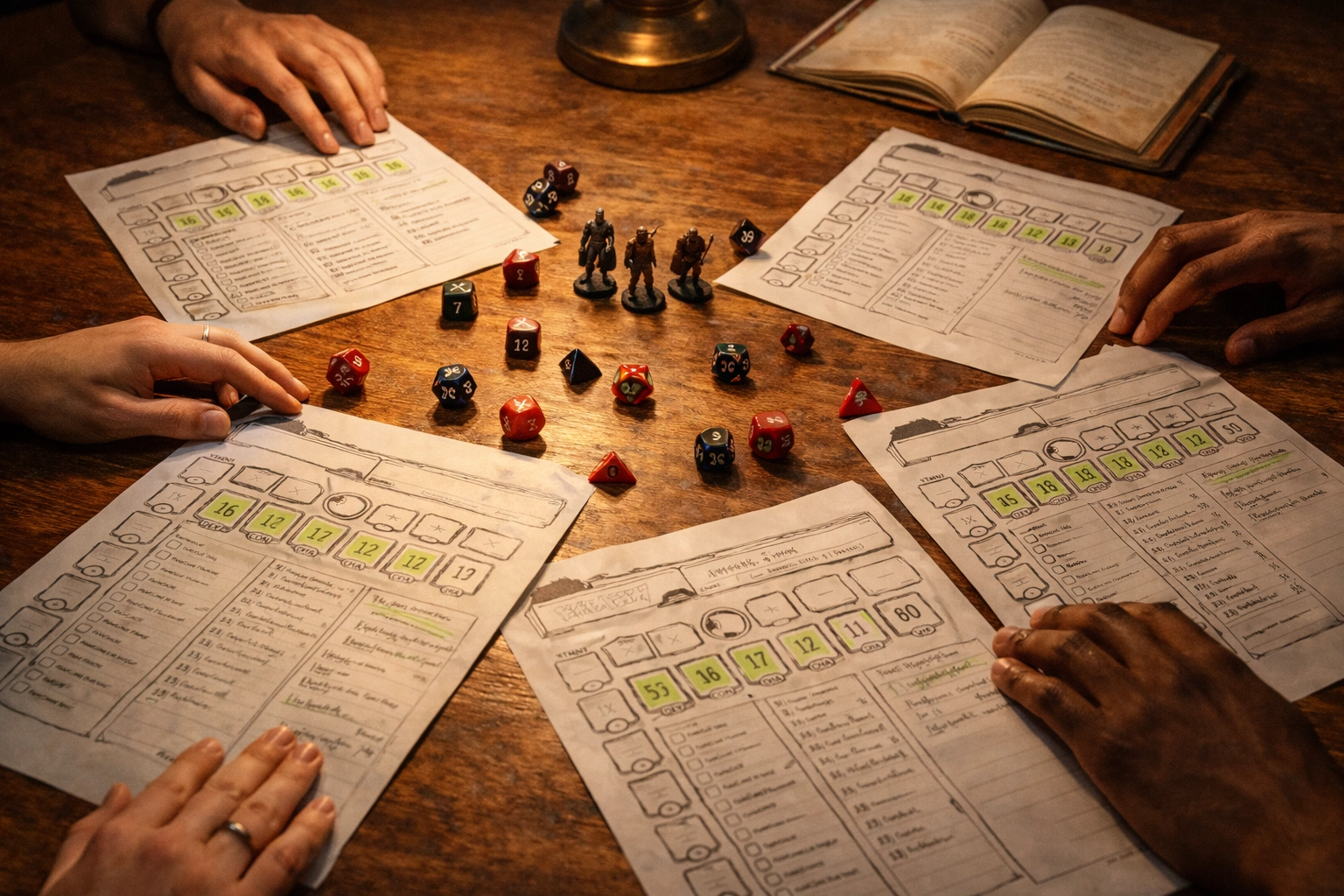
You can build a mechanically elegant character. You can craft an identity full of tension, desire, and texture. And still watch that character slowly detach from the table.
Not because the concept failed, but because it never fully integrated.
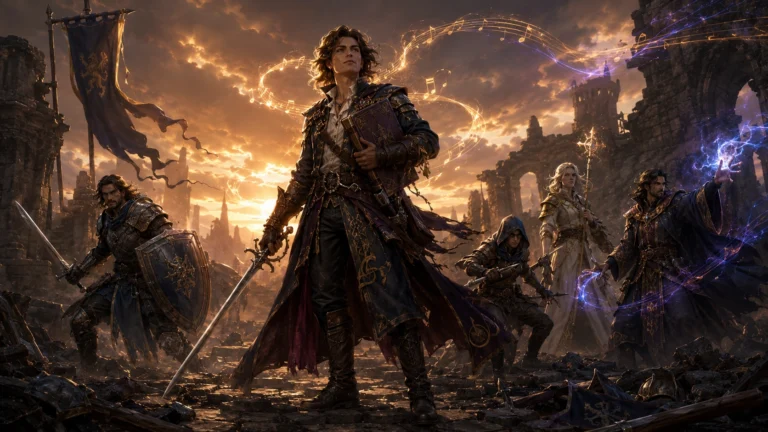
A campaign is not a collection of characters; it is a shared organism and characters that survive long campaigns do three things well:
- They integrate into party function.
- They respect spotlight ecology.
- They evolve with the campaign instead of resisting it.
Part 3 is about belonging.
Because the strongest character in isolation can still fail in a party.
“A campaign is not a collection of characters; it is a shared organism.”
Building Better Characters
Great characters aren’t built in a single step; they’re shaped over time.
This three-part series explores how to create a character that not only works on paper, but thrives across an entire campaign:
Part 1: Smart Mechanical Choices That Scale
Part 2: Meaningful Character Identity That Drives Play
Part 3: Table Integration and Long-Term Character Success
Start where you are, or follow the full journey.
The Party Is a Machine
Before we talk personality or spotlight, we need to revisit mechanics, but socially. A party is a system. Every character contributes:
- Damage output
- Battlefield control
- Survivability
- Utility
- Social leverage
- Knowledge
- Resource recovery
“Integration begins with contribution.”
When you create a character, you are entering that system. Integration begins with contribution.
Step One: Understand the Existing Gaps
In Session Zero, ask:
- Who controls the battlefield?
- Who handles front-line durability?
- Who carries healing?
- Who handles social encounters?
- Who scouts?
You don’t need to cover everything, but you should understand the ecosystem you’re entering.
Mini Case Study: The Overlapping Striker
Party:
- Barbarian (frontline damage)
- Paladin (frontline damage + support)
- Ranger (ranged damage)
New Player: Builds another high damage frontliner with no control, no utility, no social skill investment.
Result: Combat redundancy, social vacuum, spotlight compression.
Now compare: New Player builds a battlefield control Wizard or tactical support Bard.
Suddenly: Space opens, synergy forms, everyone benefits.
Integration isn’t about sacrificing your concept, iIt’s about shaping it around the table.
Niche Protection vs. Niche Contribution
“Niche protection” often gets misunderstood. It doesn’t mean: “No one else can do what I do,” it means: “I have moments where I shine.”
A healthy party allows each character to feel essential at different times.
“A healthy party gives every character a moment to be essential.”
Example: The Rogue and the Ranger
If both are stealth specialists, that’s fine.
But perhaps:
- The Rogue excels in urban infiltration.
- The Ranger excels in wilderness tracking.
Overlap is not failure. Total redundancy without differentiation is.
Ask yourself: When will I have spotlight moments that feel earned?
Spotlight Ecology: Managing Narrative Oxygen
Every table has limited attention. Some characters naturally command more oxygen:
- Big personalities
- Dramatic backstories
- Loud mechanics
- Frequent reactions
Integration requires awareness.
“Every table has limited narrative oxygen.”
The “Constant Crisis” Character
Some identity concepts demand constant attention:
- The Warlock whose patron interrupts constantly.
- The Noble who demands political scenes every session.
- The Character with a secret that must be revealed now.
These can be powerful, but if overplayed, they exhaust the table. Strong integration means pacing your drama.
Let tension simmer. Let others breathe.
Mini Case Study: Controlled Reveal
Warlock with fiendish patron.
Version A: Reveals patron immediately in Session 1. Demands group debate. Forces confrontation.
Version B: Hints at discomfort. Reveals during a meaningful mid-tier event.
The second approach builds longevity.
Session Zero Is Structural, Not Social
“Session Zero isn’t just introductions.
It’s structural engineering for the campaign.”
Many players treat Session Zero as: “We introduce our characters.”
It’s more than that. It’s where you negotiate:
- Tone
- Conflict thresholds
- PvP boundaries
- Secret management
- Party cohesion expectations
If your character requires deception or moral tension, declare it safely. Surprises are fun in fiction. They can be destabilizing at a table.
Belonging Is a Choice
Characters that survive long campaigns choose to stay. The “I’m only here temporarily” archetype often fades.
Ask: Why does my character stay with this group?
Not: Why did they start? but Why do they continue?
Mini Case Study: The Mercenary
Weak Integration: “I’m only here for the money.”
Eventually: The party chooses a low-paying moral job. Why would you stay?
Stronger Integration: “I’m here for the money, and because the Bard saved my life once.”
Now the reason evolves. Attachment sustains campaigns.
Conflict vs. Cohesion
Internal party conflict can be powerful. But only when framed correctly.
Healthy conflict:
- Is value-based.
- Is temporary.
- Leads to growth.
Unhealthy conflict:
- Is repetitive.
- Targets players, not characters.
- Blocks forward motion.
If your identity creates tension, ask: Is this friction narrative, or is it logistical?
Narrative friction deepens story. Logistical friction stalls sessions.
“Narrative friction deepens story. Logistical friction stalls sessions.”
Campaign Arcs and Character Elasticity
Campaigns change tone. A dungeon crawl may become political intrigue. A city campaign may become planar. Characters that survive long play adapt.
“Characters that survive long campaigns adapt.”
Example: The Monster Hunter in a Political Campaign
Instead of resisting: This isn’t my thing.
Adapt: I may not understand politics, but I understand predators.
Identity reframed; relevance maintained.
Power Growth and Table Balance
In Part 1, we discussed mechanical scaling; here’s the social side. If one character dramatically outpaces the rest mechanically, the DM scales encounters accordingly.
That can:
- Endanger weaker characters.
- Shift spotlight.
- Create imbalance.
Integration includes awareness of power delta. It doesn’t mean underbuilding, it means communicating.
Longevity Requires Evolution
By level 8–10, something must change. Rigid characters feel repetitive.
Ask: If my desire is fulfilled, what replaces it? If my tension resolves, what remains?
Identity should refresh itself.
Mini Case Study: The Vengeance Paladin
- Tier 1: Driven by revenge.
- Tier 2: Learns target may have been manipulated.
- Tier 3: Chooses justice over vengeance.
Same character, different energy. Growth sustains memory.
The Long Campaign Filter
Before Session One, ask:
- Can I imagine playing this character for 18 months?
- Will this personality grow or calcify?
- Does this concept rely on a single twist?
- Does this character make others better?
If the concept feels exhausting on paper, it will feel exhausting in play.
Want to Skip the Guesswork?
Not every player wants to build from scratch … and that’s okay.
If you’re looking for a character that’s already tuned for long-term play, I’ve created a series of campaign-stable builds for each class using the 2024 ruleset.
They’re designed to feel good at level 1… and still feel good at level 7.
Take a look:
👉 Fighter – The Tactical Anchor
👉 Wizard – The Arcane Controller
👉 Barbarian – The Relentless Frontline
👉 Cleric – The Divine Engine
(more classes coming soon)
Practical Integration Checklist
Before finalizing your character:
- What role do I fill in party mechanics?
- Where will I have spotlight moments?
- Where will I yield spotlight?
- Why do I stay with this party?
- Does my tension enhance or destabilize cohesion?
- Can my identity adapt to campaign tone shifts?
- Am I aware of my mechanical power relative to others?
If you can answer these clearly, you’re building for longevity.
“Mechanics give you competence.
Identity gives you depth; integration gives you permanence.”
Belonging Is the Final Ingredient
Mechanics give you competence. Identity gives you depth; integration gives you permanence.
Campaigns are not won by the strongest character; they are sustained by the characters who belong. And when a campaign ends, whether at level 8 or 18, the characters remembered most clearly are not always the most optimized.
They are the ones who:
- Fit.
- Grew.
- Stayed.
That’s character creation in 2024. Not just building; but belonging.